Corrective Hair Transplant Surgery in Kolkata
By Dr Manoj Khanna
Board-Certified Plastic Surgeon | 30+ Years of Experience
A poorly performed hair transplant can result in an unnatural hairline, patchy density, visible scars, or donor area damage. Corrective hair transplant surgery is designed to repair these issues and restore a more natural appearance.
At Enhance Clinics, Kolkata, Dr Manoj Khanna performs advanced revision hair transplant procedures tailored to each patient’s existing grafts, scalp condition, and donor availability. With over 30 years of experience in aesthetic and reconstructive surgery, he focuses on achieving natural-looking and balanced results even in complex corrective cases.
What Is Corrective Hair Transplant Surgery?
Corrective hair transplant surgery, also known as revision hair transplant surgery, is performed to improve the results of a previous hair restoration procedure.
The surgery may help correct:
- Unnatural hairlines
- Pluggy or bulky grafts
- Poor hair density
- Incorrect hair direction
- Visible donor scars
- Patchy hair growth
- Overharvested donor areas
Unlike a primary hair transplant, revision surgery is often more challenging because the scalp has already undergone surgery, and donor hair may be limited. Proper planning and surgical expertise are, therefore, extremely important.
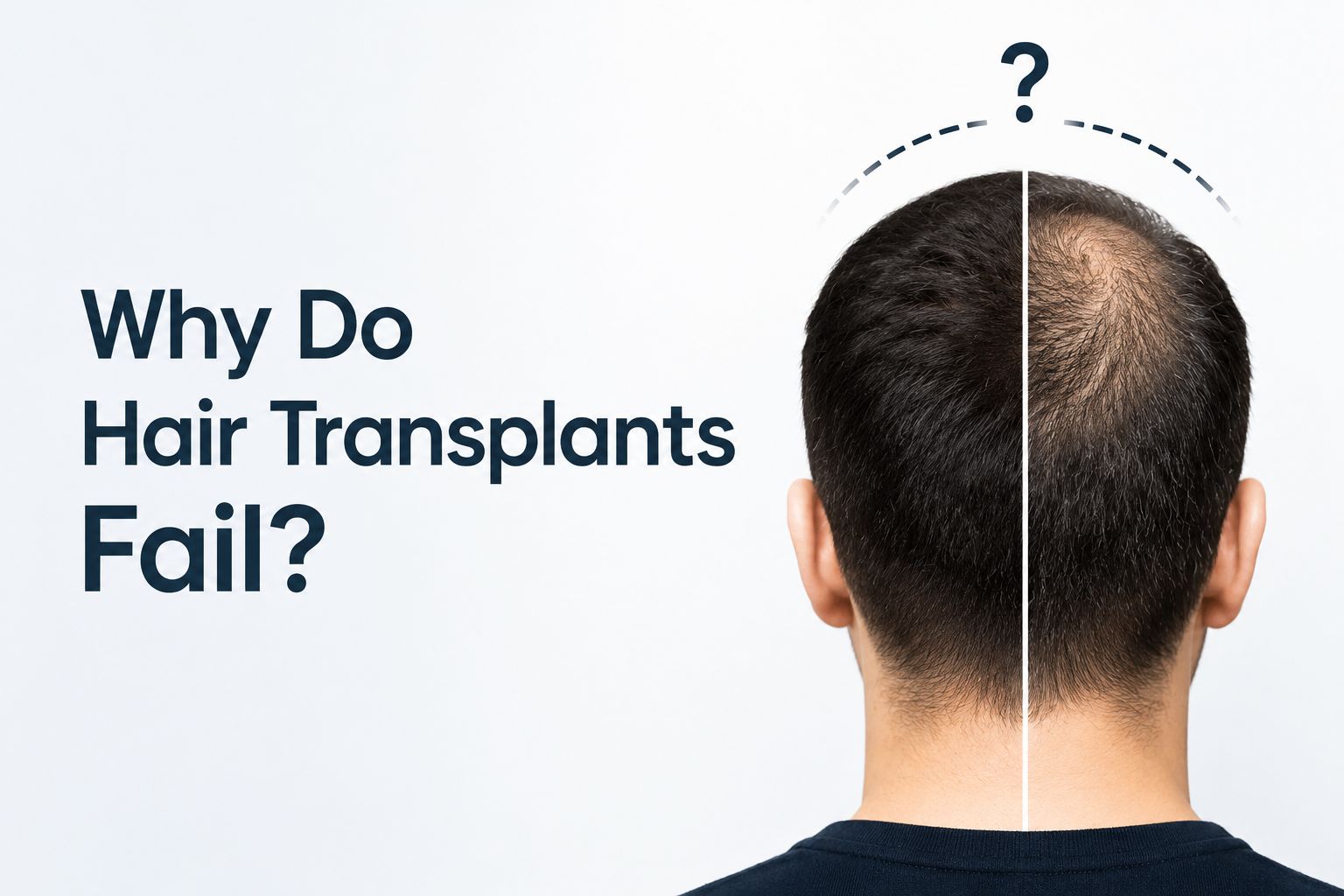
Why Do Hair Transplants Fail?
Several factors can contribute to an unsatisfactory hair transplant result.
Poor Hairline Design
The hairline is one of the most noticeable parts of a hair transplant. If designed incorrectly, the result can look artificial and aesthetically unbalanced.
Common problems include:
- Hairline placed too low
- Straight or harsh hairline
- Improper density distribution
- Age-inappropriate design
A natural hairline should suit the patient’s age, facial structure, and future hair loss pattern.
Incorrect Graft Placement
Even when sufficient grafts are used, poor placement techniques can affect the final appearance.
Problems may include:
- Wrong hair angulation
- Improper direction of growth
- Uneven distribution of grafts
- Unnatural density patterns
This can make the transplanted hair difficult to style naturally.
Low Graft Survival
In some cases, transplanted grafts may not survive properly due to:
- Poor graft handling
- Excessive graft out-of-body time
- Inadequate surgical technique
- Poor post-operative care
This may lead to patchy growth and disappointing density.
Overharvesting of the Donor Area
Excessive extraction of grafts from the donor area can create visible thinning at the back or sides of the scalp.
Overharvesting may result in:
- Patchy donor appearance
- Visible extraction scars
- Reduced donor reserve for future procedures
This is one of the most challenging issues in corrective hair transplant surgery.
Visible FUT Scars
Patients who previously underwent FUT (strip method) hair transplant surgery may develop:
- Wide linear scars
- Scar stretching
- Visible scarring with short hairstyles
These scars can often be improved using revision techniques or graft implantation into the scar tissue.
Use of Outdated Hair Transplant Techniques
Older hair transplant methods sometimes used large grafts or “hair plugs,” which often produced unnatural-looking results.
These older procedures may lead to:
- Pluggy appearance
- Poor hairline aesthetics
- Uneven density
- Visible gaps between grafts
Modern corrective techniques can help soften and improve these results significantly.
Unhappy with a Previous Hair Transplant?
If your previous hair transplant has resulted in an unnatural appearance, poor density, visible scarring, or donor area damage, corrective hair transplant surgery may help improve the outcome.
Dr Manoj Khanna, a board-certified plastic surgeon with over 30 years of experience, offers personalised revision hair transplant procedures at Enhance Clinics, Kolkata.
Contact Details
Book Consultation: +91 98300 85506
Clinic Address: Enhance Aesthetic and Cosmetic Studio, 12, Loudon Street, Flat 5A, Kolkata, West Bengal 700017, Opposite Bellevue Clinic
Website: www.plasticsurgery-india.com
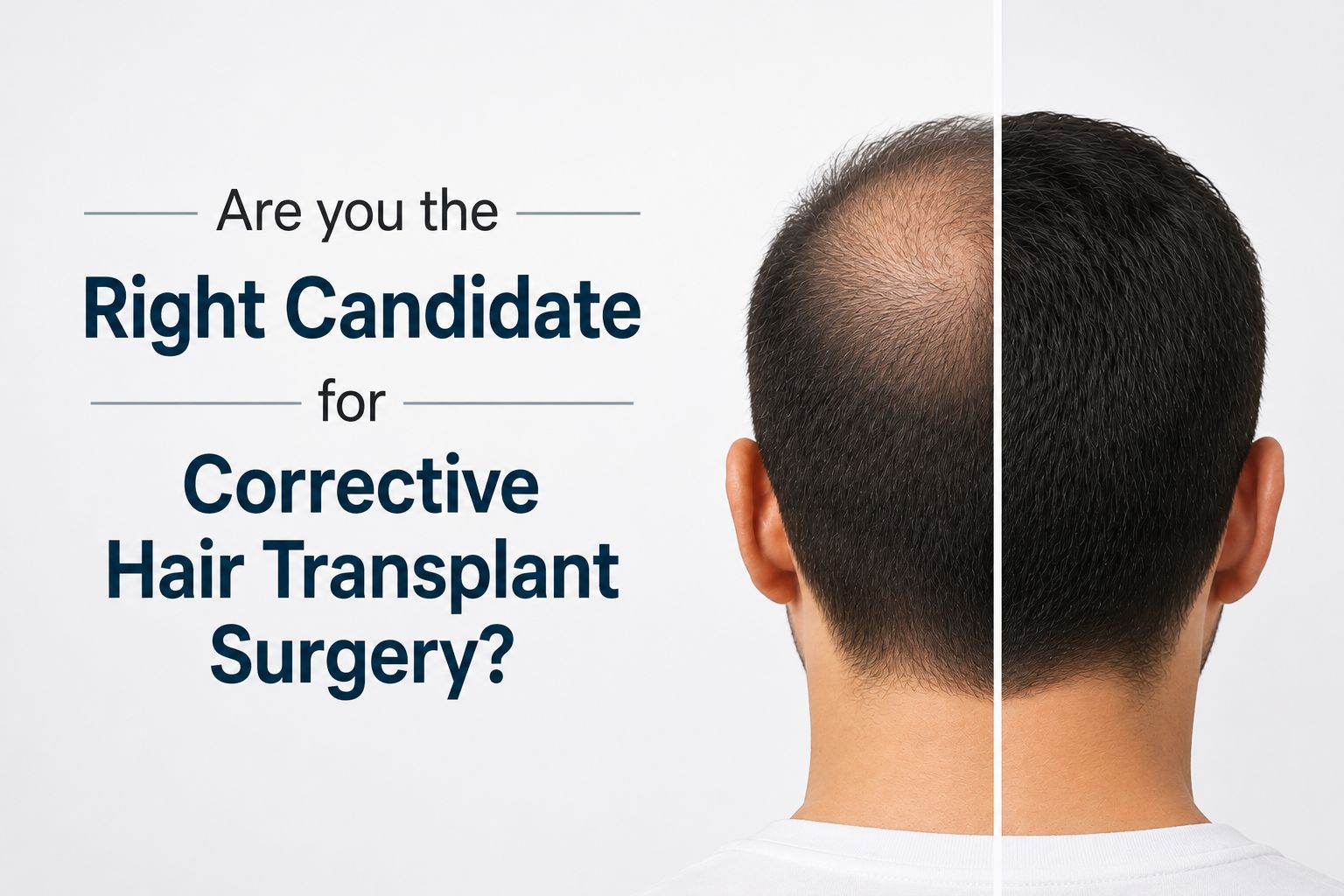
Who Is a Candidate for Corrective Hair Transplant Surgery?
Corrective hair transplant surgery may be suitable for patients who:
- Are unhappy with previous hair transplant results
- Have an unnatural or pluggy hairline
- Experience poor density after transplantation
- Have visible donor scars or donor area thinning
- Notice patchy or uneven growth
- Have undergone multiple procedures previously
A detailed consultation is necessary to evaluate the scalp condition, donor availability, and realistic possibilities for correction.
Problems That Can Be Corrected with Revision Hair Transplant Surgery
Unnatural Hairline Correction
One of the most common concerns after a failed hair transplant is an artificial-looking hairline. Corrective surgery can help redesign the hairline to create a softer, more natural appearance that suits the patient’s facial structure and age.
Improvement of Hair Density
Patients with poor graft survival or inadequate density may benefit from additional graft placement to improve overall scalp coverage.
Repair of Pluggy Hair Transplants
Older “plug” transplants can often be improved by:
- Removing poorly placed grafts
- Redistributing grafts
- Softening the frontal hairline with finer graft placement
Donor Area Repair
Overharvested donor areas may sometimes be improved using:
- Strategic graft placement
- Scalp micropigmentation
- Beard hair extraction in selected cases
FUT Scar Revision
Linear scars from FUT surgery can often be improved through scar revision techniques or the implantation of hair grafts into the scar tissue.
My Approach to Corrective Hair Transplant Surgery
Corrective hair transplant surgery requires careful planning and a conservative approach. Since donor hair is limited in many revision cases, preserving available grafts becomes extremely important.
Detailed Scalp Assessment
I begin with a thorough evaluation of:
- Existing graft placement
- Hairline design
- Donor area condition
- Scalp laxity
- Presence of scars
- Overall hair loss pattern
Understanding the previous procedure helps determine the safest and most effective corrective strategy.
Natural Hairline Planning
A natural hairline should never appear harsh or artificial. I focus on designing hairlines that complement the patient’s:
- Facial proportions
- Age
- Ethnicity
- Future hair loss progression
The goal is to create balanced and natural-looking results rather than excessive density or aggressively low hairlines.
Conservative Donor Management
In revision cases, donor grafts must be used strategically. Proper donor preservation is essential because many patients may require future procedures as hair loss progresses over time.
Combining Advanced Techniques
Depending on the complexity of the case, corrective treatment may involve:
- FUE hair transplant techniques
- Scar revision procedures
- Graft redistribution
- Beard hair extraction
- Camouflage procedures for donor areas
Every treatment plan is customised according to the patient’s needs and scalp condition.
Get a Personalised Corrective Hair Transplant Plan
Corrective hair transplant surgery is highly individualised. The right treatment plan depends on your previous procedure, donor availability, scalp condition, and long-term hair restoration goals.
Consult Dr Manoj Khanna at Enhance Clinics, Kolkata, for a detailed assessment and customised revision strategy.
Contact Details
Book Consultation: +91 98300 85506
Clinic Address: Enhance Aesthetic and Cosmetic Studio, 12, Loudon Street, Flat 5A, Kolkata, West Bengal 700017, Opposite Bellevue Clinic
Website: www.plasticsurgery-india.com
Recovery After Corrective Hair Transplant Surgery
Recovery after revision hair transplant surgery varies depending on the complexity of the procedure.
Most patients may experience:
- Mild swelling
- Redness
- Temporary scabbing
- Shedding of transplanted hair in the initial weeks
Initial hair growth usually becomes noticeable after 3–4 months, while fuller improvement develops gradually over 9–12 months.
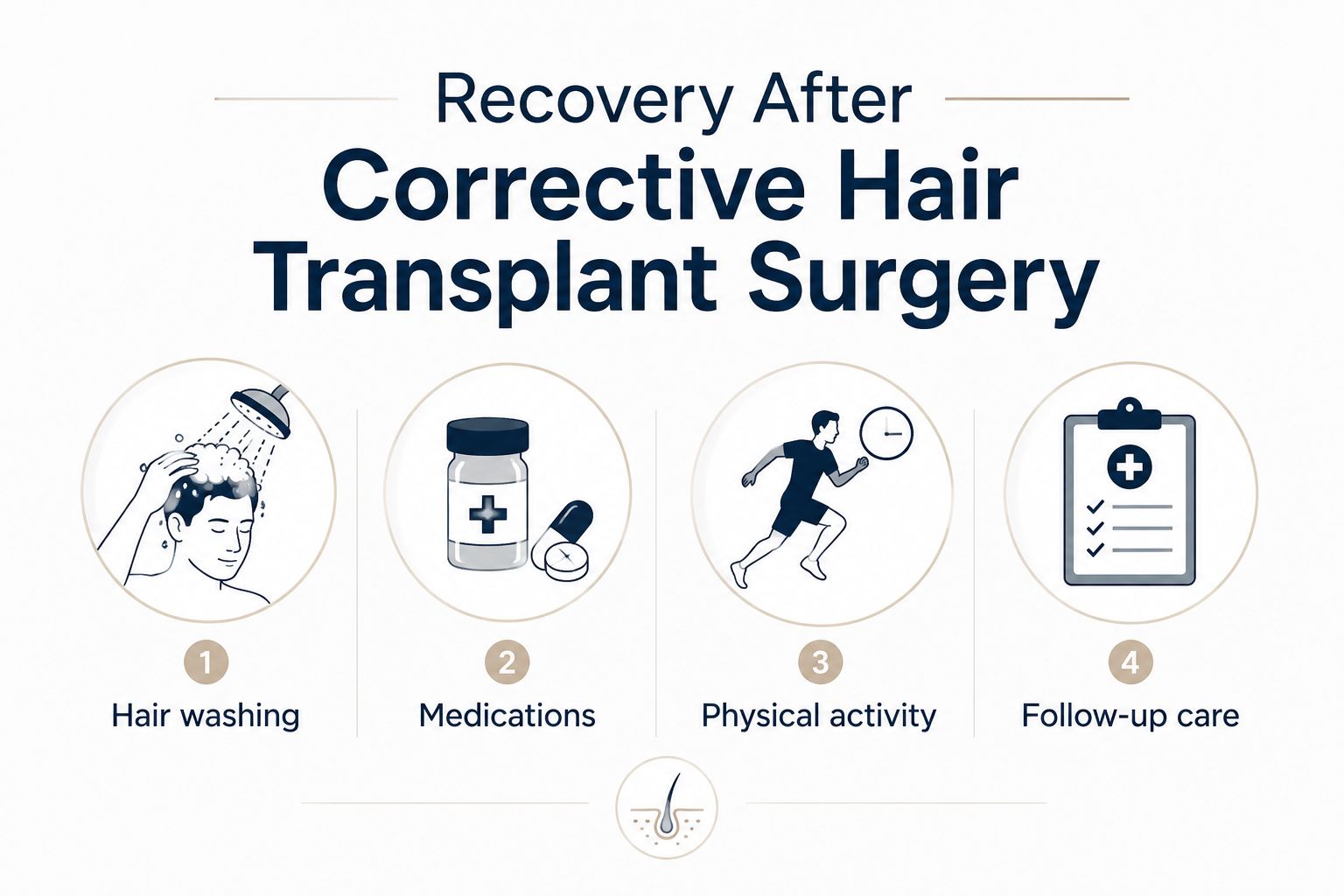
Patients are provided with detailed post-operative instructions regarding:
- Hair washing
- Medications
- Physical activity
- Follow-up care
Proper aftercare plays an important role in achieving optimal graft survival and natural-looking results.
How Much Does Corrective Hair Transplant Surgery Cost in Kolkata?
The cost of corrective hair transplant surgery depends on several factors, including:
- Extent of correction required
- Number of grafts needed
- Severity of donor area damage
- Scar revision requirements
- Complexity of previous procedures
Since every revision case is different, a personalised consultation is necessary to determine the most suitable treatment plan and cost estimate.
Why Choose Dr Manoj Khanna for Corrective Hair Transplant Surgery?
Patients from across India choose Dr Manoj Khanna for revision hair transplant procedures because of his:
- 30+ years of surgical experience
- Expertise in aesthetic and reconstructive surgery
- Natural aesthetic approach
- Experience in complex corrective cases
- Focus on ethical treatment planning
- Personalised patient care
At Enhance Clinics, the emphasis is always on achieving realistic, balanced, and natural-looking outcomes.
Consult Dr Manoj Khanna for Corrective Hair Transplant Surgery in Kolkata
Corrective hair transplant surgery requires precision, experience, and careful long-term planning. If you are dissatisfied with the results of a previous hair transplant, a professional evaluation can help determine the best possible corrective options.
Contact Details
Book Consultation: +91 98300 85506
Clinic Address: Enhance Aesthetic and Cosmetic Studio, 12, Loudon Street, Flat 5A, Kolkata, West Bengal 700017, Opposite Bellevue Clinic
Website: www.plasticsurgery-india.com
FAQs
Can a failed hair transplant be corrected completely?
Many failed hair transplant cases can be significantly improved with corrective surgery. However, results depend on donor availability, scalp condition, and the extent of previous damage.
Is corrective hair transplant surgery more difficult than a primary hair transplant?
Yes. Revision procedures are generally more complex because of scar tissue, altered graft placement, and limited donor hair.
How long should I wait before corrective hair transplant surgery?
Most patients are advised to wait at least 8–12 months after their previous transplant before considering revision surgery.
Can donor area damage be repaired?
In some cases, donor area appearance can be improved using strategic graft placement, beard hair extraction, or camouflage techniques.
Are corrective hair transplant results permanent?
The transplanted hair is generally permanent, but ongoing natural hair loss may continue in untreated areas over time.
Can old hair plug transplants be corrected?
Yes. Older plug-style hair transplants can often be improved using modern corrective techniques such as graft redistribution, hairline refinement, and strategic placement of finer grafts.
Is corrective hair transplant surgery painful?
The procedure is usually performed under local anaesthesia, so patients generally experience minimal discomfort during surgery. Mild soreness or swelling after the procedure is temporary.
How many sessions are required for corrective hair transplant surgery?
The number of sessions depends on the extent of correction required, donor availability, and the condition of the scalp. Some patients may achieve improvement in a single session, while others may require staged procedures.
Can beard hair be used in corrective hair transplant surgery?
Yes. In selected patients with limited scalp donor hair, beard hair may sometimes be used as an additional donor source to improve density or donor area coverage.
When will I see the final results after corrective hair transplant surgery?
Initial hair growth usually begins within 3–4 months. Noticeable improvement develops gradually, and final results are typically seen after 9–12 months.
Enhance Aesthetic & Cosmetic Studio
12, Loudon Street Kolkata - 700 017, India
Monday to Saturday at - 10am to 7pm (By appointment)
+91-33-22829126 / 22828500
+91 98300 85506
drmkhanna@gmail.com
Celebrities with Dr Manoj Khanna
• Arun Lal, Cricket Player
• Dilip Vengsarkar, Cricket Player
• Brijesh Patel, Cricket Player
• Roger Binny, Cricket Player
• Govinda, Actor
• Mimoh Chakrabarty, Actor
• Arjun Chakrabarty, Actor
• Nikhil Chopra, Cricket Player
• Charu Sharma, Cricket Player
• Rituparna Sengupta, Actor
• Lalchand Rajput, Cricket Player
• Brijesh Patel, Cricket Player