Post Weight Loss Body Contouring Surgery: Restoring Shape After Massive Weight Loss
By Dr Manoj Khanna
Board-Certified Plastic Surgeon | 30+ Years of Experience
Introduction
Massive weight loss is a life-changing achievement. Whether achieved through bariatric surgery, strict fitness routines, dietary changes, or lifestyle modification, losing a significant amount of weight can dramatically improve overall health and quality of life. However, many patients discover that after the weight is gone, excess loose skin remains behind.
This loose and hanging skin can affect multiple parts of the body, including the abdomen, arms, thighs, chest, buttocks, and neck. Apart from cosmetic concerns, excess skin may also cause:
- Skin irritation and fungal infections
- Difficulty exercising comfortably
- Problems wearing fitted clothing
- Poor body confidence despite successful weight loss
- Physical discomfort due to skin folds
Post-weight-loss body contouring surgery is designed to address these concerns by removing excess skin and reshaping the body to create smoother, firmer, and more proportionate contours.
According to Dr Manoj Khanna, body contouring after major weight loss is not simply about aesthetics. In many cases, it helps improve hygiene, mobility, comfort, and emotional well-being while completing the patient’s transformation journey.
What is Post-Weight-Loss Body Contouring?
Post-weight-loss body contouring refers to a group of plastic surgery procedures performed to remove loose skin and reshape the body after significant weight reduction.
Many patients mistakenly assume that losing fat alone will automatically tighten the skin. Unfortunately, after years of stretching due to obesity, the skin often loses its ability to retract completely.
Body contouring procedures help:
|
Goals of Body Contouring Surgery |
Benefits |
|
Remove excess hanging skin |
Improves appearance and comfort |
|
Tighten and reshape body contours |
Creates better body proportions |
|
Reduce skin fold irritation |
Improves hygiene |
|
Enhance mobility |
Easier movement and exercise |
|
Improve confidence |
Better body image after weight loss |
Unlike weight loss treatments, body contouring is focused on reshaping the body after weight has already been lost.
Why Does Loose Skin Develop After Massive Weight Loss?
The amount of loose skin varies from person to person. Some individuals may experience mild sagging, while others develop large folds of excess skin affecting daily life.
Loss of Skin Elasticity
The skin contains collagen and elastin fibres that help it stretch and recoil. When the body remains overweight for many years, these fibres become weakened.
After major weight loss, the skin may not shrink back completely, especially when:
- Large amounts of weight are lost
- Weight loss happens rapidly
- The skin has been stretched for a long time
Age and Genetic Factors
Younger patients generally have better skin elasticity compared to older individuals. Genetics also plays an important role in determining how the skin responds after weight loss.
Factors influencing skin quality include:
- Age
- Genetics
- Smoking history
- Sun damage
- Nutritional status
- Hydration
Speed and Amount of Weight Loss
Patients who lose weight rapidly after bariatric surgery often experience more loose skin compared to gradual weight loss.
The following table shows common patterns:
|
Weight Loss Pattern |
Likelihood of Loose Skin |
|
Mild to moderate weight loss |
Lower |
|
Massive weight loss |
High |
|
Rapid weight loss |
Higher |
|
Long-term obesity |
Higher |
|
Older age group |
Higher |
Even patients with excellent fitness routines may still require surgery to remove stretched skin that cannot tighten naturally.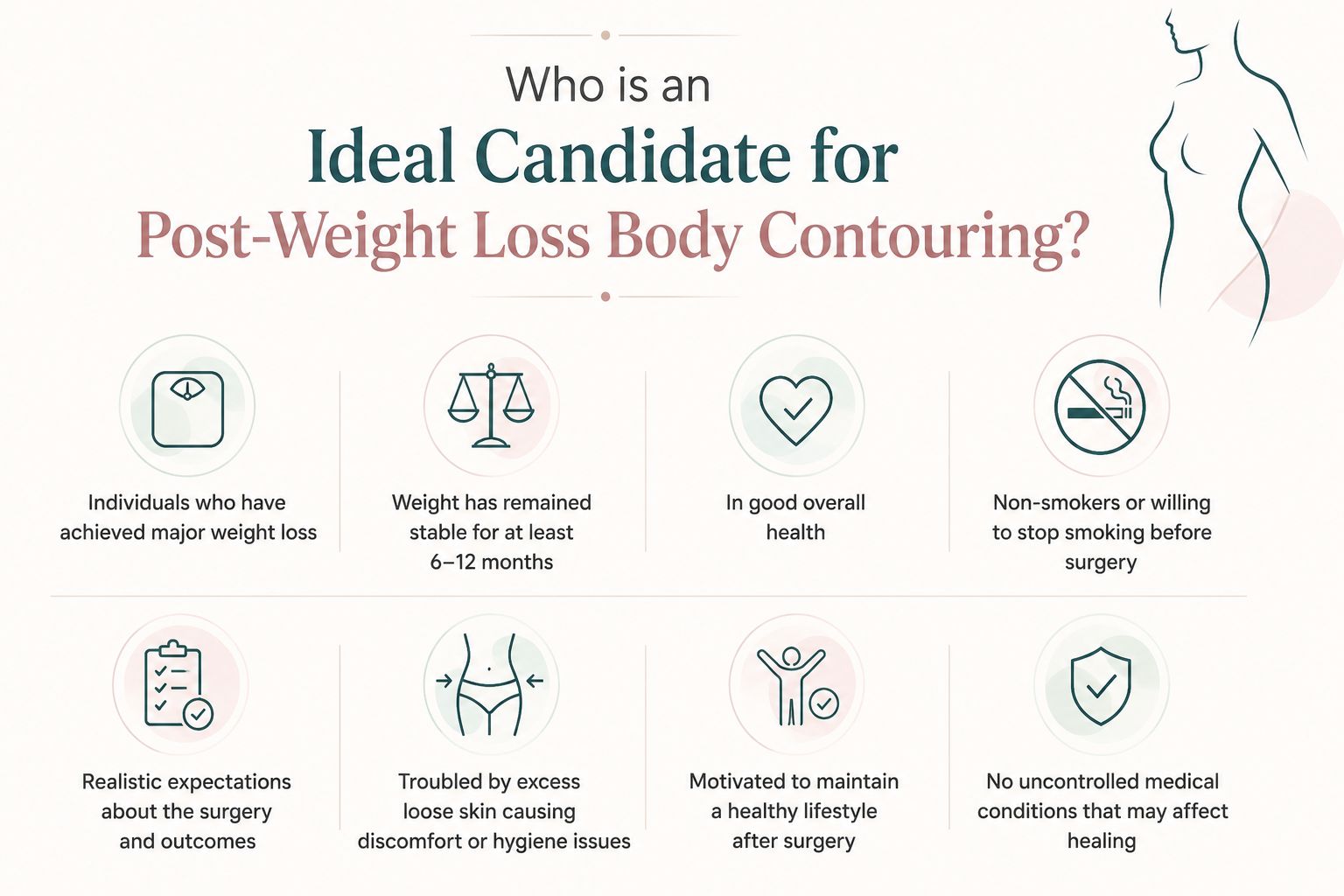
Who is an Ideal Candidate for Post-Weight Loss Body Contouring?
Not every patient who loses weight is immediately ready for body contouring surgery. Proper timing and patient selection are extremely important for achieving safe and long-lasting results.
Ideal candidates usually include:
- Individuals who have achieved major weight loss
- Patients whose weight has remained stable for at least 6–12 months
- Non-smokers or those willing to stop smoking before surgery
- Individuals in good overall health
- Patients with realistic expectations
- People troubled by loose hanging skin
According to Dr. Manoj Khanna, weight stability is one of the most important factors before planning body contouring surgery. Significant weight fluctuations after surgery can affect the final results.
When Should You Consider Surgery?
Many patients wonder about the right timing for surgery after weight loss.
You may be ready for body contouring if:
- Your weight has plateaued
- You are near your ideal body weight
- Nutritional deficiencies have been corrected
- You can maintain a healthy lifestyle
- Excess skin is causing physical or emotional discomfort
Surgery may need to be delayed if:
- You are still actively losing weight
- You plan a future pregnancy
- Your diabetes or medical conditions are uncontrolled
- You are a heavy smoker
- You have unrealistic expectations
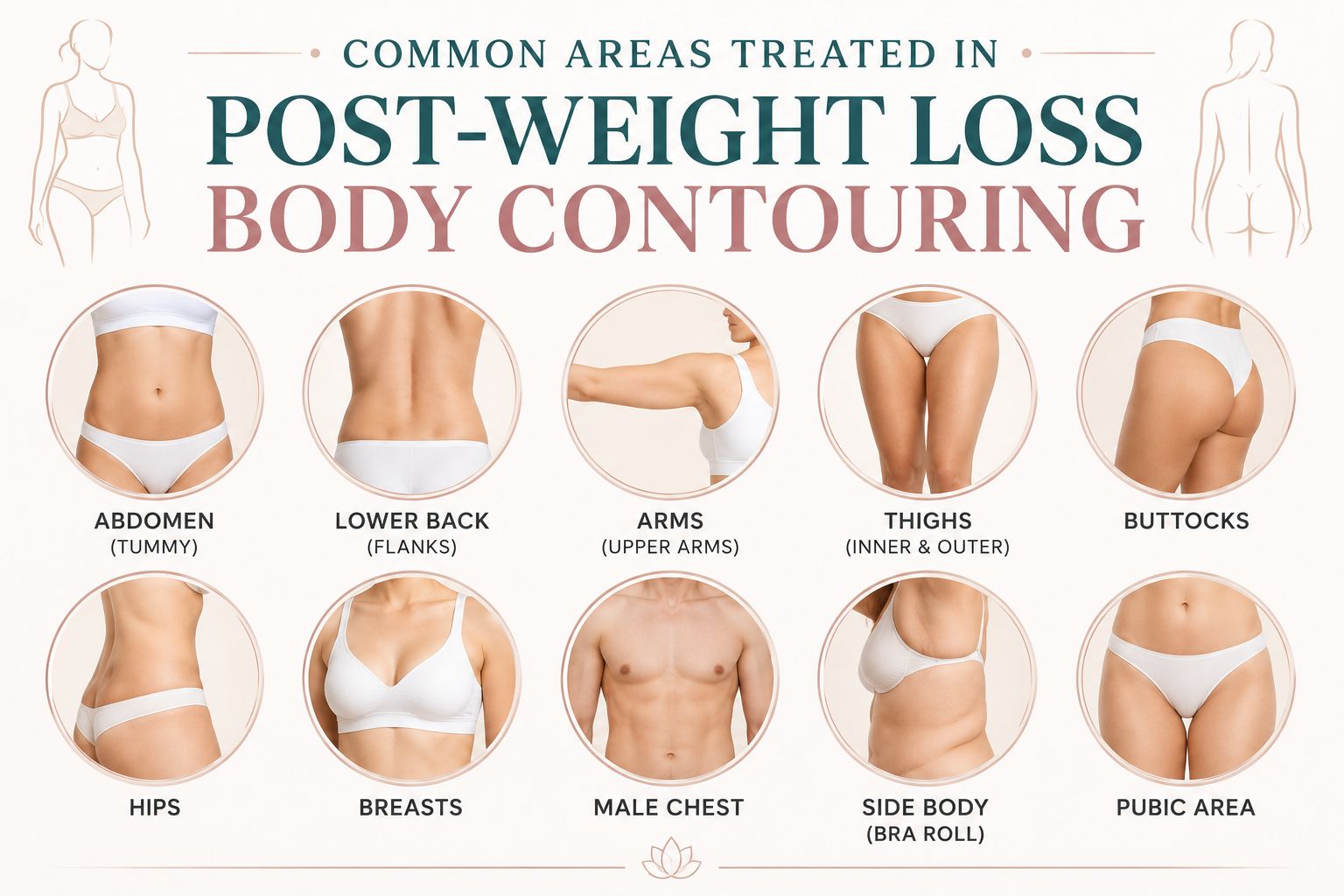
Common Areas Treated in Post-Weight Loss Body Contouring
Excess skin can affect nearly every area of the body after massive weight loss. Treatment plans are customised depending on the patient’s concerns, anatomy, and goals.
Abdomen and Waist
The abdomen is one of the most commonly treated areas.
Patients may experience:
- Hanging abdominal apron skin
- Stretch marks
- Weak abdominal muscles
- Skin infections beneath folds
Procedures commonly performed include:
|
Procedure |
Purpose |
|
Removes excess abdominal skin and tightens muscles |
|
|
Lower Body Lift |
Reshapes the abdomen, waist, hips, and buttocks |
|
Belt Lipectomy |
Circumferential skin removal around the waist |
Arms
After major weight loss, many patients develop loose hanging skin on the upper arms, commonly called “bat wings.”
Arm lift surgery (Brachioplasty) helps:
- Remove excess skin
- Improve arm definition
- Reduce friction during movement
- Create a slimmer contour
Thighs
Loose skin in the thighs may cause discomfort during walking and exercise.
Common concerns include:
- Inner thigh rubbing
- Sagging thigh skin
- Difficulty wearing fitted clothing
- Skin irritation from friction
A thigh lift procedure can improve contour and reduce excess tissue.
Chest and Breasts
Weight loss often causes significant volume loss and sagging in the chest region.
Women may experience:
- Drooping breasts
- Loss of breast fullness
- Stretch marks
Men may experience:
- Loose chest skin
- Residual fatty tissue
- Sagging appearance after obesity
Procedures may include:
- Breast lift surgery
- Breast reduction
- Breast augmentation with lift
- Male chest contouring surgery
Face and Neck
Massive weight loss can also affect facial appearance, leading to:
- Loose neck skin
- Jowling
- Hollow cheeks
- Loss of facial definition
Selected patients may benefit from facial rejuvenation or neck contouring procedures to restore balance and harmony.
Types of Post-Weight Loss Body Contouring Procedures
Post-weight-loss body contouring often involves combining multiple procedures to address different body regions. The treatment plan is customised based on the amount of excess skin, patient health, and surgical goals.
Lower Body Lift
A lower body lift is commonly performed after massive weight loss and addresses:
- Abdomen
- Outer thighs
- Buttocks
- Waistline
This procedure can significantly improve overall lower body contour while removing large amounts of excess skin.
Tummy Tuck (Abdominoplasty)
A tummy tuck focuses on the abdominal area and may include:
- Removal of excess skin
- Tightening of abdominal muscles
- Reshaping the waistline
- Improvement of lower abdominal contour
For many patients, this procedure helps restore a firmer and flatter abdomen after weight loss.
Arm Lift Surgery
Brachioplasty removes loose skin from the upper arms to create improved arm contour and definition.
This procedure is especially beneficial for patients who feel self-conscious wearing sleeveless clothing after weight loss.
Thigh Lift Surgery
A thigh lift procedure is commonly performed in patients who develop sagging skin along the inner or outer thighs after massive weight loss. Excess thigh skin can cause discomfort during walking, friction-related irritation, and difficulty wearing fitted clothing comfortably. Thigh contouring surgery helps improve leg proportions by removing excess skin and tightening the remaining tissue.
Depending on the amount of loose skin present, the procedure may involve limited or more extensive lifting techniques to achieve smoother and firmer contours.
Breast Reshaping Procedures
Significant weight loss often leads to loss of breast volume and skin elasticity. Women may experience drooping breasts, stretched skin, and flattening of breast tissue after major weight reduction. Breast reshaping procedures help restore a more youthful and proportionate appearance.
Depending on the patient’s goals and anatomy, surgery may involve:
- Breast lift surgery
- Breast lift with implants
- Breast reduction surgery
- Combination reshaping procedures
The treatment plan is customised to improve breast contour while maintaining balance with the rest of the body.
Liposuction in Body Contouring
Liposuction is often used as an adjunct procedure during post-weight-loss body contouring surgery. While liposuction alone cannot correct large amounts of loose skin, it can help refine body shape and improve contour definition in selected areas.
According to Dr. Manoj Khanna, combining liposuction with skin tightening procedures can help create smoother transitions and more natural-looking body contours after major weight loss.
Benefits of Post-Weight Loss Body Contouring Surgery
Post-weight-loss body contouring offers both aesthetic and functional benefits. Many patients experience dramatic improvement not only in physical appearance but also in comfort, mobility, and confidence after surgery.
Some of the major benefits include:
- Better body proportions and contour definition
- Improved comfort during movement and exercise
- Reduction in skin irritation and recurrent infections
- Easier clothing fit
- Enhanced self-confidence and body image
- Greater motivation to maintain long-term weight loss results
For many patients, body contouring surgery represents the final step in completing their transformation journey after significant weight loss.
Preparing for Body Contouring Surgery After Weight Loss
Proper preparation is extremely important before undergoing body contouring surgery. Patients who have experienced massive weight loss, especially after bariatric surgery, often require detailed evaluation before surgical planning.
A comprehensive medical assessment is usually performed to evaluate overall health, nutritional status, weight stability, and healing capacity. Nutritional optimisation is particularly important because deficiencies in protein, iron, vitamins, and minerals can affect wound healing and recovery.
|
Nutrient |
Importance in Recovery |
|
Protein |
Tissue healing and repair |
|
Iron |
Prevention of anaemia |
|
Vitamin B12 |
Blood and nerve health |
|
Zinc |
Wound healing support |
|
Vitamin D |
Recovery and immunity |
Patients are also advised to stop smoking well before surgery, as smoking significantly increases the risk of delayed healing, infection, and poor scar quality.
Another important part of preparation involves discussing realistic expectations. Patients should understand that body contouring surgery improves loose skin and body shape, but scars are an unavoidable part of the procedure. Surgical planning may also involve staging multiple procedures over separate sessions, depending on the extent of correction required.
Considering Body Contouring After Massive Weight Loss?
If loose skin is affecting your comfort, confidence, or daily activities after major weight loss, a personalised consultation can help determine the most suitable treatment approach. Dr. Manoj Khanna offers customised post-weight-loss body contouring procedures designed to improve both body shape and quality of life.
Contact Details
Book Consultation: +91 98300 85506
Clinic Address: Enhance Aesthetic and Cosmetic Studio, 12, Loudon Street, Flat 5A, Kolkata, West Bengal 700017, Opposite Bellevue Clinic
Website: www.plasticsurgery-india.com
Recovery After Post-Weight Loss Body Contouring
Recovery after body contouring surgery depends on the number and type of procedures performed. Some patients may require an overnight hospital stay and monitoring, especially after extensive body contouring surgeries involving multiple areas.
Immediate Recovery Period
During the initial recovery phase, swelling, bruising, tightness, and mild discomfort are common. Surgical drains may sometimes be used temporarily to prevent fluid accumulation. Patients are carefully monitored during the early healing period to ensure smooth recovery.
Compression Garments
Compression garments play an important role after body contouring surgery. These garments help reduce swelling, support healing tissues, and assist the skin in adapting to its new contour. Patients are usually advised to wear compression garments continuously for several weeks after surgery.
Activity Restrictions
Early walking is encouraged soon after surgery to improve circulation and reduce the risk of blood clots. However, strenuous exercise, heavy lifting, and intense physical activity should be avoided during the early healing phase.
Most patients can gradually resume light daily activities within a few weeks, although complete recovery may take longer depending on the extent of surgery performed.
Healing Timeline
Recovery progresses gradually over several months as swelling reduces and scars mature.
|
Recovery Stage |
Approximate Timeline |
|
Initial swelling and discomfort |
1–2 weeks |
|
Return to desk work |
2–3 weeks |
|
Light exercise |
4–6 weeks |
|
Scar maturation |
Several months |
|
Final contour results |
6–12 months |
Follow-Up Care
Regular follow-up visits are essential after body contouring surgery. These appointments allow the surgeon to monitor healing, address concerns, and guide patients through the recovery process. Proper follow-up care plays an important role in achieving safe and long-lasting results.
Scars After Body Contouring Surgery
Scars are an unavoidable part of post-weight-loss body contouring because excess skin must be surgically removed. However, experienced plastic surgeons attempt to place scars strategically in areas that can usually be concealed beneath clothing.
Initially, scars may appear red, firm, or slightly raised, but they generally soften and fade gradually over time. Several factors influence scar quality, including skin type, genetics, smoking habits, nutrition, and postoperative care.
Patients are commonly advised to follow scar management measures such as:
- Silicone-based scar therapy
- Sun protection
- Proper wound care
- Regular follow-up visits
- Following postoperative instructions carefully
With proper care, scars usually become less noticeable over time.
Risks and Complications of Post-Weight Loss Body Contouring
Like all major surgical procedures, post-weight-loss body contouring carries certain risks and potential complications. These may include:
- Bleeding
- Infection
- Fluid accumulation (seroma)
- Delayed wound healing
- Asymmetry
- Scarring issues
- Need for revision surgery
The risk of complications can be reduced through careful patient selection, proper surgical planning, nutritional optimisation, and smoking cessation. Choosing an experienced plastic surgeon is one of the most important factors in improving safety and achieving satisfactory outcomes.
How Many Procedures Can Be Combined?
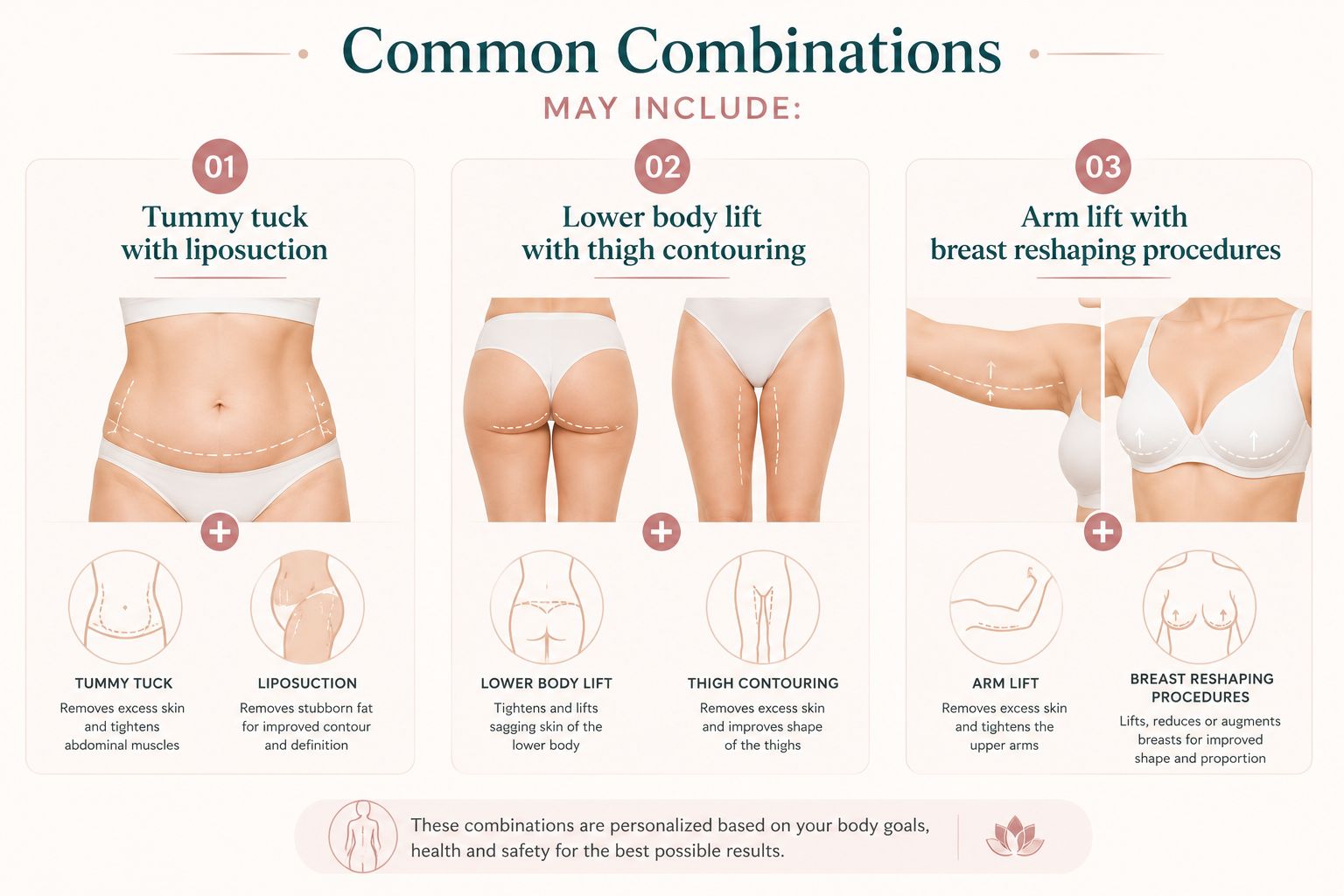
Many patients require treatment of multiple body areas after significant weight loss. In selected cases, multiple procedures may be combined during a single surgical session to improve overall body balance and reduce total recovery time.
Common combinations may include:
- Tummy tuck with liposuction
- Lower body lift with thigh contouring
- Arm lift with breast reshaping procedures
However, the decision to combine surgeries depends on several important factors, including:
- Duration of surgery
- Patient health condition
- Nutritional status
- Recovery tolerance
- Overall surgical safety
In some patients, staged procedures performed over multiple sessions may offer a safer and more comfortable approach.
Restore Your Body Confidence After Weight Loss
Post-weight loss body contouring can help address loose skin, improve body proportions, and complete your transformation journey. Schedule a consultation with me to discuss customised treatment options based on your body goals and recovery expectations.
Contact Details
Book Consultation: +91 98300 85506
Clinic Address: Enhance Aesthetic and Cosmetic Studio, 12, Loudon Street, Flat 5A, Kolkata, West Bengal 700017, Opposite Bellevue Clinic
Website: www.plasticsurgery-india.com
Results of Post-Weight-Loss Body Contouring Surgery
The results of body contouring surgery become progressively more visible as swelling subsides and tissues settle over time. Patients often notice significant improvement in body shape, contour definition, comfort, and clothing fit.
Long-term outcomes are best maintained through:
- Stable weight maintenance
- Regular exercise
- Healthy dietary habits
- Consistent lifestyle discipline
Beyond the physical transformation, many patients also experience emotional and psychological benefits, including increased confidence and improved self-image after surgery.
Why Choose Dr Manoj Khanna for Post-Weight Loss Body Contouring Surgery?
With more than 30 years of experience in plastic and cosmetic surgery, I offer personalised treatment plans for patients seeking body contouring after massive weight loss.
My approach focuses on:
- Individualised surgical planning
- Natural-looking body proportions
- Patient safety and realistic outcomes
- Comprehensive postoperative care
- Experience handling complex body contouring cases after major weight loss
Every patient is carefully evaluated to create a customised treatment strategy based on body anatomy, skin quality, and personal goals.
Conclusion
Massive weight loss is a remarkable achievement, but excess loose skin can sometimes prevent patients from fully appreciating the results of their transformation. Post-weight-loss body contouring surgery helps improve body shape, remove hanging skin, and restore smoother, firmer contours.
In addition to aesthetic improvement, these procedures can enhance comfort, mobility, hygiene, and self-confidence. For many patients, body contouring represents the final stage in completing their weight loss journey.
Patients considering post-weight-loss body contouring surgery should seek consultation with an experienced plastic surgeon to understand the available treatment options, recovery process, and expected outcomes.
FAQs
- What is post-weight-loss body contouring surgery?
Post-weight-loss body contouring surgery involves procedures designed to remove excess loose skin and reshape the body after significant weight reduction.
- How much weight should I lose before body contouring surgery?
Patients are usually advised to reach near their target weight and maintain a stable weight before undergoing surgery.
- How long should my weight remain stable before surgery?
Most surgeons recommend maintaining a stable weight for at least 6–12 months before body contouring procedures.
- Can multiple body contouring procedures be done together?
Yes, selected procedures can often be combined safely depending on the patient’s overall health and surgical plan.
- Is post-weight-loss body contouring painful?
Some discomfort and tightness are expected after surgery, but pain is generally manageable with medications and postoperative care.
- How long is the recovery period after body contouring surgery?
Recovery varies depending on the extent of surgery, but most patients gradually resume routine activities within several weeks.
- Will there be visible scars after surgery?
Yes, scars are unavoidable because excess skin must be removed surgically. However, scars generally fade gradually over time.
- Can loose skin return after body contouring surgery?
Significant weight gain or future weight fluctuations can affect results and potentially lead to recurrent skin laxity.
- Is liposuction enough for loose skin after major weight loss?
No. Liposuction removes fat but cannot adequately tighten large amounts of loose skin after massive weight loss.
- Who is not a good candidate for post-weight-loss body contouring?
Patients with unstable weight, uncontrolled medical conditions, smoking habits, or unrealistic expectations may not be ideal candidates.
- How soon after bariatric surgery can body contouring be performed?
Body contouring is usually considered after weight stabilisation, typically 12–18 months after bariatric surgery.
- Are the results of body contouring permanent?
Results can be long-lasting if patients maintain a stable weight and continue a healthy lifestyle.
Enhance Aesthetic & Cosmetic Studio
12, Loudon Street Kolkata - 700 017, India
Monday to Saturday at - 10am to 7pm (By appointment)
+91-33-22829126 / 22828500
+91 98300 85506
drmkhanna@gmail.com
Celebrities with Dr Manoj Khanna
• Arun Lal, Cricket Player
• Dilip Vengsarkar, Cricket Player
• Brijesh Patel, Cricket Player
• Roger Binny, Cricket Player
• Govinda, Actor
• Mimoh Chakrabarty, Actor
• Arjun Chakrabarty, Actor
• Nikhil Chopra, Cricket Player
• Charu Sharma, Cricket Player
• Rituparna Sengupta, Actor
• Lalchand Rajput, Cricket Player
• Brijesh Patel, Cricket Player