
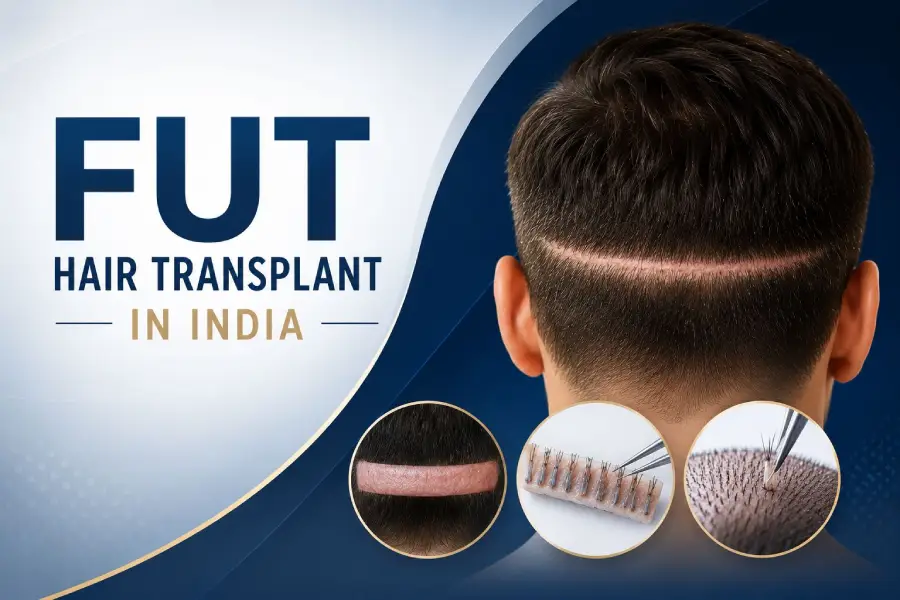
Hair loss can affect confidence, appearance, and even social interactions. Over the years, I have treated many patients who struggled with progressive hair thinning, receding hairlines, and bald patches. While modern hair transplantation offers multiple techniques, FUT Hair Transplant continues to remain one of the most effective options for patients who require a large number of grafts with excellent graft survival.
As a plastic surgeon specialising in hair transplantation procedures, I often recommend FUT hair transplant to suitable candidates who are looking for maximum coverage and long-term results. In this article, I will explain the FUT procedure, its advantages, limitations, and how it compares to other hair transplant techniques.
What is FUT Hair Transplant?
FUT stands for Follicular Unit Transplantation. It is a surgical hair transplantation technique in which a thin strip of hair-bearing scalp is removed from the donor area, usually the back of the scalp. This strip is then carefully dissected under magnification into individual follicular unit grafts, which are implanted into the balding areas.
Unlike older hair transplant methods that produced unnatural “plug-like” results, FUT uses naturally occurring follicular units that contain 1–4 hairs. This helps create a natural-looking hairline and density.
The donor area at the back of the scalp is genetically resistant to hair loss in most individuals. When these follicles are transplanted to the thinning or bald areas, they continue to grow permanently in their new location.
FUT remains a highly reliable option for patients with moderate to advanced hair loss, especially when a large number of grafts are needed in a single session.
Considering Hair Transplant Surgery?
Consult Dr. Manoj Khanna for personalised hair restoration planning and natural-looking results.
Contact Details
Book Consultation: +91 98300 85506
Clinic Address: Suite 5A, Minto Park, Maruti Building, 12, Sir UN Brahmachari Sarani, opposite Bellevue Clinic, Kolkata, West Bengal 700017
Website: www.plasticsurgery-india.com
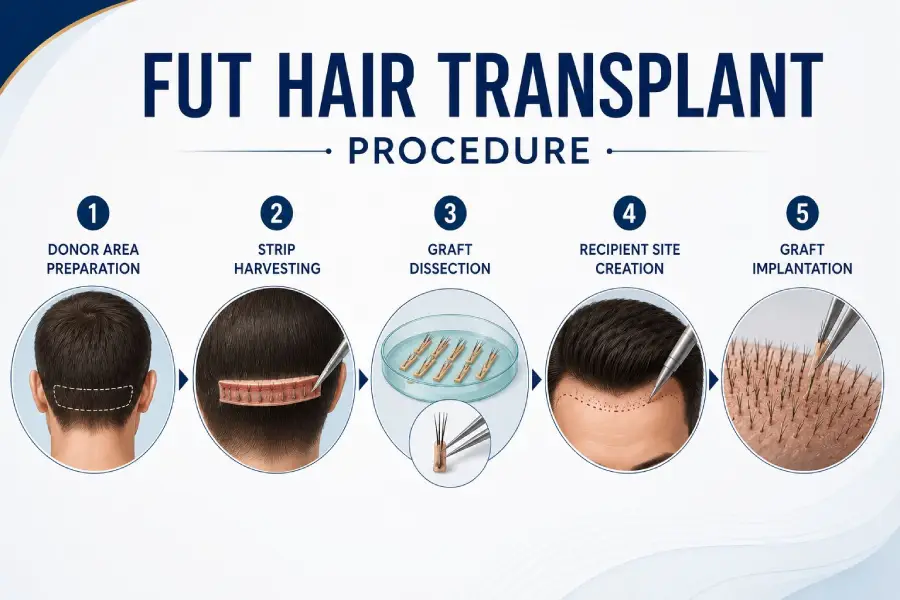
How Does the FUT Hair Transplant Procedure Work?
One of the most common questions patients ask me is how the FUT procedure is actually performed. FUT hair transplant is a carefully planned microsurgical procedure that involves several important stages.
Step 1 – Donor Area Preparation
The first step is identifying the donor area. This area is usually located at the back or sides of the scalp, where hair follicles are more resistant to hormonal hair loss.
Before surgery, the donor region is trimmed and cleaned thoroughly. Local anaesthesia is administered to ensure patient comfort throughout the procedure. Since FUT is performed under local anaesthesia, patients remain awake but do not feel pain during the surgery.
Proper donor assessment is extremely important because the quality and density of donor hair directly influence the final outcome of the transplant.
Step 2 – Strip Harvesting
Once the donor area is prepared, a thin strip of scalp containing healthy hair follicles is carefully removed. The size of the strip depends on the number of grafts required.
This step requires precision and experience because the goal is to obtain maximum grafts while minimising tension on the donor wound. After the strip is removed, the donor area is closed with sutures using specialised closure techniques.
In many cases, I use advanced closure methods that help minimise the visibility of the linear scar after healing.
Step 3 – Graft Dissection
The harvested donor strip is then divided into individual follicular units under high magnification.
This is one of the most critical stages of the FUT procedure. The grafts must be handled delicately to maintain follicle viability and ensure successful growth after implantation.
Each graft is carefully prepared based on the number of hairs it contains. Single-hair grafts are generally used in the frontal hairline for a softer appearance, while multi-hair grafts are placed behind the hairline to improve density.
Step 4 – Recipient Site Creation
After graft preparation, tiny recipient sites are created in the balding areas of the scalp.
This step determines the final appearance of the transplant. Hairline design, graft angle, direction, and density planning are extremely important for achieving natural-looking results.
I always customise the hairline according to the patient’s facial structure, age, and pattern of hair loss. An unnatural or poorly planned hairline can affect the overall aesthetic outcome.
Step 5 – Graft Implantation
The prepared grafts are then implanted into the recipient sites one by one.
Proper placement ensures that the transplanted hair grows in the correct direction and blends naturally with the existing hair. Depending on the number of grafts required, the procedure may take several hours.
Patients are usually discharged on the same day with detailed post-operative instructions.
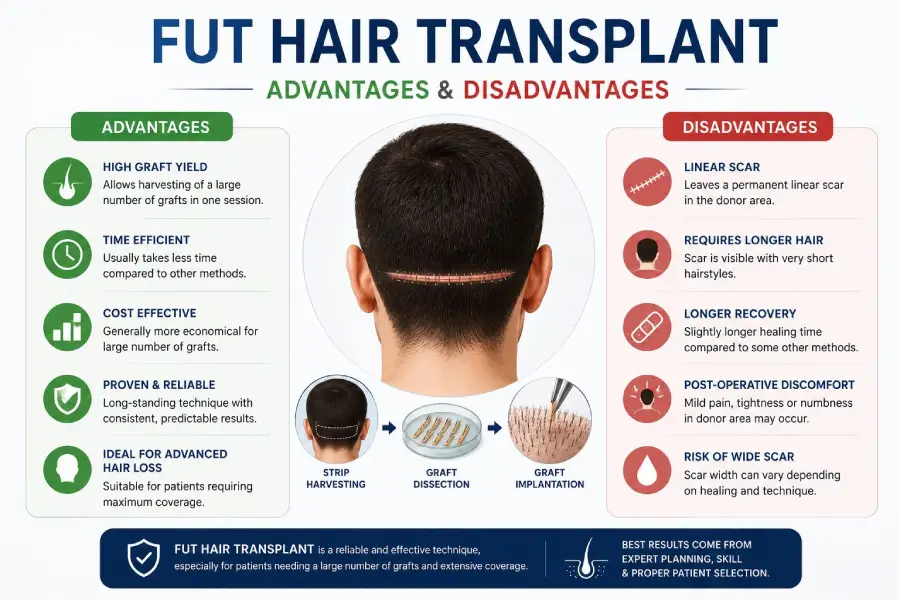
Advantages of FUT Hair Transplant
Despite the growing popularity of FUE, FUT still offers several important advantages for selected patients.
Higher Number of Grafts in a Single Session
One of the biggest benefits of FUT is the ability to harvest a large number of grafts in one procedure. This is particularly useful for patients with advanced baldness who require extensive coverage.
Because the strip method allows efficient harvesting, a greater number of follicles can often be obtained without overharvesting the donor area.
Excellent Graft Survival
In FUT, grafts are dissected under magnification with minimal trauma to the follicles. This often leads to excellent graft survival rates and healthy hair growth after transplantation.
Healthy graft survival is essential for achieving good density and long-term results.
Efficient Use of Donor Hair
The donor area is a limited resource in every hair transplant patient. FUT allows careful utilisation of this donor supply while preserving surrounding follicles.
For patients who may require additional procedures in the future, preserving donor reserves becomes very important.
Suitable for Advanced Hair Loss
Patients with severe hair loss often need thousands of grafts to achieve adequate coverage. FUT can be an excellent option in such cases because it enables larger graft sessions.
In some patients, FUT may also be combined with FUE in future sessions for further improvement.
Often More Economical
Compared to multiple extensive FUE sessions, FUT may sometimes be more cost-effective for patients requiring a high number of grafts.
However, the decision between FUT and FUE should never be based on cost alone. Proper evaluation is necessary to determine which technique is most suitable for the patient’s scalp condition, donor quality, hairstyle preference, and long-term goals.
Planning a FUT Hair Transplant?
Get expert guidance from Dr. Manoj Khanna, a hair transplantation surgeon with over 30 years of experience.
Contact Details
Book Consultation: +91 98300 85506
Clinic Address: Enhance Aesthetic and Cosmetic Studio, 12, Loudon Street, Flat 5A, Kolkata, West Bengal 700017, Opposite Bellevue Clinic
Website: www.plasticsurgery-india.com
Disadvantages of FUT Hair Transplant
Although FUT offers several advantages, patients should also understand its limitations before making a decision.
Linear Scar Formation
The most important drawback of FUT is the linear scar left in the donor area after strip harvesting.
While modern closure techniques help reduce scar visibility significantly, patients who prefer extremely short hairstyles may notice the scar.
Longer Recovery Compared to FUE
FUT generally involves a slightly longer recovery period compared to FUE because the donor area requires healing after strip removal and suturing.
Patients may experience mild tightness or discomfort in the donor area during the initial recovery phase.
Post-Operative Discomfort
Some patients report temporary soreness, numbness, or tightness in the donor region for a few days after surgery. However, these symptoms usually improve gradually with proper care and medications.
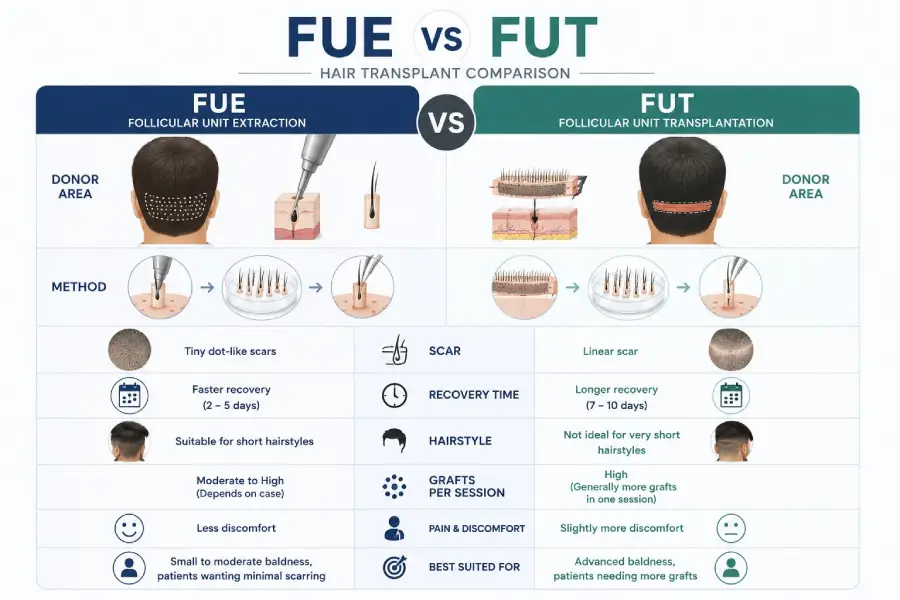
FUT vs FUE Hair Transplant
One of the most common questions I receive in consultation is whether FUT or FUE is better.
The truth is that there is no universal answer. Both techniques have advantages and limitations, and the ideal choice depends on the patient’s individual needs.
FUT involves removing a strip of scalp from the donor area, whereas FUE involves extracting individual follicular units directly from the scalp using specialised punches.
FUT usually allows harvesting of a larger number of grafts in one session, while FUE avoids a linear scar and offers quicker recovery.
For patients who prefer shorter hairstyles, FUE may be preferable. However, for patients requiring maximum graft yield and extensive coverage, FUT is the preferred option.
Who is the ideal candidate for a FUT hair transplant?
Not every patient experiencing hair loss is automatically a suitable candidate for FUT surgery. Proper assessment is essential before deciding on the most appropriate hair transplantation technique.
In my practice, I usually recommend a FUT hair transplant for patients who require a large number of grafts and have adequate donor hair density.
Patients with Advanced Hair Loss
Individuals with extensive baldness often need a higher graft count to achieve meaningful coverage. FUT can be particularly effective in such cases because it allows efficient harvesting of a large number of follicular units in a single procedure.
Patients with Good Donor Hair Density
A healthy donor area is one of the most important requirements for successful FUT surgery. Patients with dense hair growth in the back of the scalp are usually better candidates for this procedure.
Individuals Comfortable with Longer Hair
Because FUT leaves a linear scar in the donor region, it is generally more suitable for patients who prefer to keep their hair slightly longer. Longer hairstyles usually conceal the scar effectively.
Patients Looking for Maximum Coverage
For individuals seeking higher density or larger scalp coverage in fewer sessions, FUT may offer advantages over other methods.
However, every patient is different. During consultation, I carefully evaluate scalp laxity, donor density, hair characteristics, age, and future hair loss progression before recommending any surgical plan.
Looking for Natural Hair Transplant Results?
Discuss your hair transplantation goals with Dr. Manoj Khanna and receive a personalised treatment plan.
Contact Details
Book Consultation: +91 98300 85506
Clinic Address: Suite 5A, Minto Park, Maruti Building, 12, Sir UN Brahmachari Sarani, opposite Bellevue Clinic, Kolkata, West Bengal 700017
Website: www.plasticsurgery-india.com
Recovery After FUT Hair Transplant
Recovery is an important phase of every hair transplant procedure. Proper post-operative care helps support graft survival and healing.
First Few Days After Surgery
Patients may experience mild swelling, tightness, or discomfort in the donor area during the initial days after surgery. These symptoms are usually temporary and improve with medications and proper care.
The transplanted grafts are delicate during the early healing phase, so patients must avoid unnecessary touching or rubbing of the scalp.
Hair Washing Instructions
Hair washing usually begins a few days after surgery, depending on the healing progress.
Patients are advised to use gentle techniques while cleaning the scalp. Excessive pressure or scratching should be avoided because it can disturb the grafts.
Detailed washing instructions are always provided after the procedure.
Physical Activity Restrictions
Heavy exercise, gym workouts, swimming, and strenuous physical activities should be avoided during the early recovery period.
Excessive sweating or trauma to the scalp can interfere with healing and increase the risk of complications.
Suture Removal
Since FUT involves donor area closure with sutures, stitch removal is generally performed around 10–14 days after surgery.
Proper wound care during this period helps minimise scar formation.
Hair Growth Timeline
Many patients become anxious when transplanted hairs begin shedding a few weeks after surgery. This is a normal part of the hair growth cycle known as shock shedding.
New hair growth usually starts within 3–4 months. Noticeable improvement becomes visible gradually over several months, while final results may take 10–12 months or longer, depending on the individual patient.
FUT Hair Transplant Scar – What to Expect?
One of the most important concerns associated with FUT surgery is the donor scar.
Because the procedure involves strip harvesting, a linear scar forms in the donor area after healing. However, with proper surgical technique and wound closure, the scar is often thin and easily concealed under surrounding hair.
In my practice, I pay close attention to donor closure techniques to minimise scar visibility as much as possible.
Factors Affecting Scar Appearance
Several factors influence how the scar heals, including:
- Individual healing tendency
- Scalp laxity
- Surgical technique
- Post-operative care
- Tension during closure
Can the Scar Be Hidden?
In most patients, the scar remains hidden under medium-length hair. However, individuals who prefer extremely short hairstyles may notice the scar more easily.
Patients should discuss hairstyle preferences during consultation so that the most suitable technique can be selected.
Risks and Complications of FUT Hair Transplant
Like any surgical procedure, FUT hair transplant carries certain risks, although serious complications are uncommon when performed by experienced surgeons.
Infection
Infections are rare but can occur if post-operative hygiene instructions are not followed properly.
Shock Loss
Temporary shedding of existing hair near the transplanted area may occur in some patients. This is usually temporary and improves over time.
Wide Scar Formation
Some patients may develop a wider donor scar depending on scalp tension and healing characteristics.
Temporary Numbness
Mild numbness or altered sensation around the donor area may occur temporarily after surgery. In most cases, sensation gradually returns over time.
Poor Hair Growth
Graft survival may be affected if follicles are damaged during handling or if post-operative care instructions are ignored.
This is why choosing an experienced hair transplant surgeon is extremely important.
Cost of FUT Hair Transplant in India
The cost of FUT hair transplant surgery in India varies depending on several factors.
These include:
- Number of grafts required
- Extent of hair loss
- Surgeon’s expertise
- Clinic infrastructure
- Surgical team experience
- Location of the clinic
Patients with advanced baldness generally require more grafts, which may increase the overall cost of treatment.
During consultation, I evaluate the scalp and estimate the approximate graft requirement before discussing the treatment plan and cost details.
It is important to remember that hair transplant surgery should not be chosen solely based on low pricing. Surgical expertise, safety standards, graft handling quality, and long-term planning are equally important for achieving satisfactory results.
How to Choose the Right Hair Transplant Surgeon
Hair transplant surgery is a highly technique-sensitive procedure. The final outcome depends greatly on surgical planning, graft handling, and aesthetic judgment.
When selecting a surgeon, patients should consider:
Experience and Training
An experienced surgeon understands both the technical and artistic aspects of hair transplantation.
Natural Hairline Design
Hairline creation plays a major role in achieving natural-looking results. Poorly designed hairlines can appear artificial and difficult to correct later.
Sterility and Safety Standards
Hair transplant surgery should always be performed in a properly equipped medical facility that follows strict hygiene protocols.
Before-and-After Results
Reviewing previous patient results can provide valuable insight into the surgeon’s work and consistency.
Why Choose Dr. Manoj Khanna for FUT Hair Transplant?
As a plastic surgeon with more than 30 years of surgical experience, I focus on providing personalised hair transplantation treatments tailored to each patient’s needs.
My approach emphasises:
- Natural-looking hairline design
- Careful donor area management
- Advanced surgical planning
- Patient safety and comfort
- Long-term aesthetic outcomes
Every patient experiences hair loss differently, which is why individual assessment and customised treatment planning remain essential.
Conclusion
FUT Hair Transplant continues to remain a reliable and effective hair transplantation technique, especially for patients requiring a large number of grafts and extensive scalp coverage.
Although newer methods such as FUE have become increasingly popular, FUT still offers important advantages in selected cases, including excellent graft yield and efficient donor utilisation.
The key to successful hair transplant surgery lies in proper patient selection, realistic expectations, meticulous surgical technique, and long-term planning.
If you are considering hair transplantation surgery, a detailed consultation can help determine whether FUT hair transplant is the right option for your specific hair loss pattern and goals.
Start Your Hair Transplantation Journey
Consult Dr. Manoj Khanna to explore the most suitable hair transplant technique for your hair loss condition.
Contact Details
Book Consultation: +91 98300 85506
Clinic Address: Suite 5A, Minto Park, Maruti Building, 12, Sir UN Brahmachari Sarani, opposite Bellevue Clinic, Kolkata, West Bengal 700017
Website: www.plasticsurgery-india.com
FAQs About FUT Hair Transplant
1. Is FUT hair transplant permanent?
Yes, the transplanted follicles are usually permanent because they are taken from genetically resistant donor areas.
2. Does FUT hair transplant leave a scar?
Yes, FUT typically leaves a linear scar in the donor area, although it is often concealed by surrounding hair.
3. Is FUT more painful than FUE?
Most patients tolerate FUT well under local anaesthesia. Mild discomfort or tightness may occur during recovery.
4. How long does recovery take after FUT surgery?
Initial healing usually takes around 10–14 days, while complete hair growth develops gradually over several months.
5. When will I see results after FUT hair transplant?
New hair growth commonly begins around 3–4 months after surgery, with fuller results appearing within 10–12 months.
6. Can FUT and FUE be combined?
Yes, in some patients both techniques may be combined to improve graft numbers and coverage.
7. How many grafts can be transplanted in one FUT session?
The number varies depending on donor density and scalp condition, but FUT can often provide a large graft count in a single session.
8. Is FUT suitable for severe baldness?
Yes, FUT is often recommended for patients with advanced hair loss who require extensive coverage.
9. Will the transplanted hair fall again?
Transplanted hair is generally resistant to pattern baldness, although natural ageing and existing non-transplanted hair may continue to thin.
10. Can women undergo FUT hair transplant?
Yes, FUT may also be suitable for selected female patients experiencing hair thinning or hair loss.
11. Is FUT cheaper than FUE?
In some cases, FUT may be more economical for patients requiring a large number of grafts.
12. How do I know if I am a good candidate for FUT hair transplant?
A detailed consultation with an experienced hair transplant surgeon is necessary to evaluate donor hair quality, scalp condition, and hair loss pattern.