
Chemical Peeling in Kolkata for Comprehensive Skin-Renewing Action
What Is Chemical Peeling and How Does It Work?
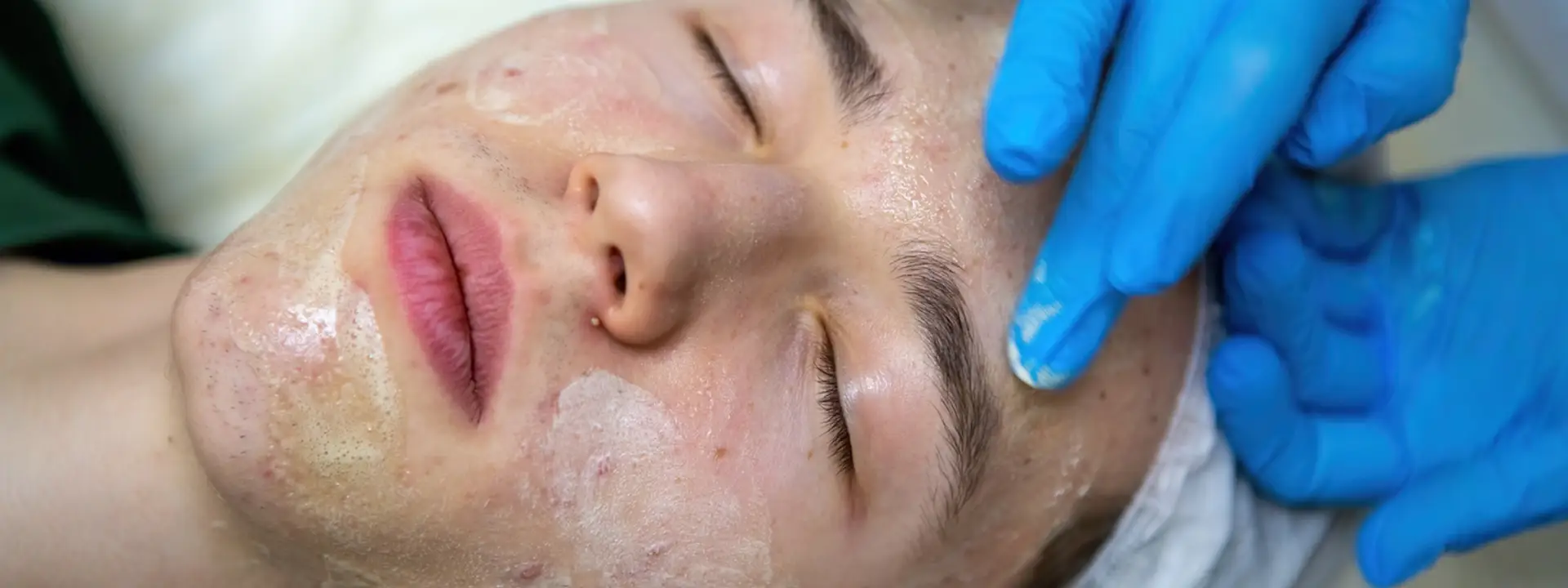
Chemical peeling is a non-surgical skin-rejuvenation procedure that uses a carefully selected exfoliating solution to remove damaged and dead cells from the skin’s outer layers. This controlled exfoliation encourages fresh cell turnover and may support collagen production.
As the treated surface renews, the skin may gradually appear brighter, smoother and more even. The result depends on the peel selected, treatment depth, skin concern and number of sessions.
Which Type of Chemical Peel Is Right for You?
No single chemical peel suits every skin type or concern. Dr Manoj Khanna recommends the peel after evaluating skin sensitivity, pigmentation, acne activity, texture and treatment goals.
Glycolic Acid Peel
Derived from sugar cane, glycolic acid provides controlled exfoliation for dullness, mild pigmentation, uneven texture and early signs of ageing.
Salicylic Acid Peel
Salicylic acid may benefit oily and acne-prone skin. It helps reduce excess sebum, clear congested pores and support breakout management.
Lactic Acid Peel
Lactic acid provides gentler exfoliation while supporting skin hydration. It may suit selected patients with dry or sensitive skin, mild pigmentation or uneven tone.
Mandelic Acid Peel
Mandelic acid penetrates more slowly because of its larger molecular structure. It may be considered for sensitive skin, darker skin tones, acne and pigmentation.
TCA Peel
A trichloroacetic acid peel acts at a deeper level and may be considered for more noticeable pigmentation, sun damage, fine lines or selected mild scars. It can require more recovery than lighter peels.
Combination Peels
A combination of peeling agents may be selected when pigmentation, acne, uneven texture or early ageing signs need to be addressed together.
The final choice depends on professional skin assessment, previous treatments and the expected degree of improvement.
When You Should Consider a Consultation?
- Acne marks continue to affect skin appearance
- Uneven skin tone reduces facial brightness
- Pigmentation patches are becoming more stubborn
- Dull skin lacks a healthy, natural glow
- Fine lines make the skin appear aged
- Rough skin texture feels difficult to manage
- Dark spots remain visible despite skincare products
- Clearer, smoother skin feels increasingly important
- Professional skin rejuvenation feels more reliable
- Minimal downtime suits a fast-paced lifestyle
- Healthy-looking skin feels aesthetically important
- Natural-looking skin refinement feels more appealing
What Does Dr Khanna Evaluate?
- Skin tone and pigmentation tendency influence peel selection and treatment intensity.
- Pigmentation, active acne, acne marks, dullness, oiliness and texture concerns require different peeling solutions.
- Sensitive skin may require a gentler solution or a modified treatment plan.
- Retinoids, exfoliating acids and other active products may need to be temporarily paused as advised.
- The consultation reviews previous procedures, medications, active skin conditions, and healing tendencies.
- The consultation establishes what can realistically improve and whether several sessions may be required.
Common Skin Concerns Treated with Chemical Peeling
Acne-Scar Improvement
Chemical peeling may reduce the appearance of superficial acne-related scars or marks and gradually refine uneven skin texture.
Pigmentation Correction
The treatment may improve selected pigmentation, melasma, tanning and dark spots while supporting a more even-looking complexion.
Dull-Skin Rejuvenation
Chemical peels remove damaged surface cells, gradually revealing fresher and brighter-looking skin.
Fine-Line Reduction
Controlled resurfacing may soften early fine lines while improving overall skin smoothness and texture.
Oily-Skin Management
Selected chemical peels help manage excess oil, clogged pores and acne-prone skin.
Sun-Damage Improvement
Treatment may improve uneven pigmentation, tanning, roughness and texture changes associated with sun exposure.
Rough Skin Texture
Controlled exfoliation helps improve surface roughness and unevenness through gradual skin renewal.
Skin-Glow Enhancement
Professional chemical peeling supports clearer, healthier-looking skin and improved natural radiance.
Chemical Peeling Treatment Benefits
| Chemical Peeling Benefits |
How It Helps
|
|---|---|
| Improves Skin Texture | Refines rough and uneven skin |
| Reduces Pigmentation | Improves selected dark spots, melasma and uneven tone |
| Brightens Dull Skin | Encourages a fresher and more radiant appearance |
| Supports Acne-Mark Improvement | Gradually reduces the visibility of superficial marks |
| Controls Excess Oil | Assists in managing oily and acne-prone skin |
| Non-Surgical Rejuvenation | Improves skin appearance without an invasive procedure |
| Minimal Downtime | Most patients resume routine activities shortly afterwards |
| Customisable Treatment | Peel type and intensity are selected according to the concern |
| Supports Cell Renewal | Removes damaged surface cells and encourages fresh skin turnover |
| Multiple Peel Options | Allows treatment to be adapted to different skin types and goals |
Chemical Peeling Procedure: A Step-by-Step Guide
Step 1
Skin Assessment and Preparation
The skin type, concerns, medical history and treatment goals are evaluated before selecting a peel. We may advise sun protection and temporarily stopping strong active skincare products before treatment.
Step 2
Skin Cleansing and Degreasing
The treatment area is thoroughly cleansed to remove makeup, oil and impurities. A preparatory solution may be used to support even penetration of the peel.
Step 3
Application of the Chemical Solution
A temporary tingling, stinging or warming sensation may occur during application.
Step 4
Controlled Action Period
The solution remains on the skin for a carefully monitored period based on its formulation and intended treatment depth.
Step 5
Neutralisation and Removal
Use a neutralising solution or cooling method, as needed, to stop the peel’s action. Some formulations may be self-neutralising.
Step 6
Moisturiser and Sunscreen Application
Apply soothing skincare products and sunscreen to protect treated skin after the peel.
Step 7
Post-Treatment Instructions
Patients receive personalised guidance on moisturising, sun protection, skincare products and follow-up.
Recovery and Results after Chemical Peeling
Immediately after Treatment
The skin may appear mildly red or feel warm, tight or sensitive. Most patients can return home shortly after the session.
Over the Next Few Days
Light flaking or peeling may develop, depending on the solution and treatment intensity. Some peels cause little or no visible peeling.
Within the First Week
The skin may begin to appear brighter and smoother as surface renewal progresses.
Over Multiple Sessions
Pigmentation, acne-related marks, oiliness and texture concerns may require a planned series of treatments for more consistent improvement.
Maintenance
Periodic maintenance may be recommended to preserve skin clarity and support longer-term results.
How Many Chemical Peel Sessions May You Need?
The number of sessions depends on the skin concern, peel type, treatment intensity and individual response. Some patients may notice improvement after one treatment, while others benefit from a planned series.
- Mild dullness or uneven texture may require around 3–4 sessions
- Pigmentation, acne or post-acne marks may require around 4–6 sessions
- Melasma or deeper concerns may require additional treatment
- Maintenance may be recommended every few months
The schedule may be adjusted according to how the skin responds.
Does a Chemical Peel Hurt or Require Downtime?
Most patients experience mild, temporary tingling, stinging or warmth while the peeling solution is active. The sensation usually reduces after the solution is neutralised or removed.
Downtime depends on the peel type and strength. Mild redness, dryness or light flaking may occur for a few days, while deeper peels can require a longer recovery period.
Risks of Chemical Peeling and Safety Measures to Follow after Treatment
Chemical Peeling Risks and Side Effects
- Mild redness and irritation
- Temporary skin peeling
- Minor burning or tingling
- Temporary dryness
- Mild swelling
- Temporary sensitivity
- Pigment changes
- Temporary breakouts
- Minor crusting or flaking
- Prolonged redness
- Increased sun sensitivity
- Rare superficial scarring
Safety Measures to Follow after Chemical Peeling
- Avoid direct sunlight
- Apply high-SPF sunscreen
- Keep the skin moisturised
- Avoid harsh skincare products initially
- Do not scratch or peel flaking skin
- Avoid excessive heat
- Skip saunas and steam rooms
- Avoid active exfoliation temporarily
- Follow the prescribed skincare routine
- Maintain proper hydration
- Avoid unnecessary facial procedures temporarily
- Attend scheduled follow-up assessments
Chemical Peeling Eligibility and Suitability
| Patient Category |
Suitability
|
Important Considerations
|
|---|---|---|
| Patients with Pigmentation Concerns | Commonly suitable | Requires personalised skin assessment |
| Patients Seeking Skin Brightening | Frequently suitable | Peel type is selected according to the goal |
| Patients with Acne-Prone Skin | Often suitable | Active acne severity requires evaluation |
| Patients with Uneven Skin Texture | Commonly suitable | Multiple sessions may be needed |
| Patients Seeking Non-Surgical Rejuvenation | Suitable in selected cases | Expectations should remain realistic |
| Pregnant or Breastfeeding Patients | Usually avoided | Treatment is typically postponed |
| Patients with an Active Skin Infection | Temporarily unsuitable | The skin should heal first |
| Patients with Highly Sensitive Skin | Requires careful evaluation | Peel strength must be selected cautiously |
What Results Can You Realistically Expect after a Chemical Peel?
Chemical peeling may improve skin brightness, texture, pigmentation and selected acne-related concerns. Results depend on the peel, skin condition, and treatment course.
Patients Should Understand that:
- One session may not correct long-standing concerns
- Results develop progressively
- Not every peel causes visible peeling
- Double-chin fullness has become more noticeable
- Deeper concerns may require several sessions
- Melasma can require ongoing management
- Pigmentation-prone skin needs careful treatment selection
- Daily sun protection helps maintain improvement
- Individual results vary
How Much Does Chemical Peeling Cost in Kolkata?
The cost of chemical peeling varies based on the peel selected, treatment intensity, skin concern, and the number of sessions included in the personalised plan.
Factors Affecting Chemical Peeling Pricing
Peel type selected
Treatment intensity
Skin concern being treated
Number of sessions required
Single or combination peel
Personalised treatment plan
Achieve Brighter Skin with Advanced Chemical Peeling in Kolkata
Dr Manoj Khanna offers chemical peeling in Kolkata to improve uneven texture, pigmentation concerns and dull-looking skin.
Schedule Your Consultation
Share a few details and the clinic team will guide you on the next step.
Key Facts at a Glance
| Information | Details |
|---|---|
| Procedure Type | Non-surgical skin-resurfacing treatment |
| Common Concerns | Pigmentation, acne-related marks, dullness, excess oil, sun damage, rough texture and early fine lines |
| Peel Options | Glycolic, salicylic, lactic, mandelic, TCA and combination peels |
| Typical Session Duration | Approximately 20–45 minutes, depending on the peel and treatment plan |
| Anaesthesia | Generally not required |
| Hospital Stay | Not required; treatment is performed as an outpatient procedure |
| Return to Routine | Most patients resume routine activities shortly after treatment |
| Typical Treatment Course | Around 3–6 sessions for many concerns, although requirements vary |
| Visible Peeling | Depends on the peel type and strength; not every peel causes noticeable flaking |
| Treatment Planning | Dr Manoj Khanna, MCh Plastic Surgery |
| Location | Suite 5A, Minto Park, Maruti Building, 12, Sir UN Brahmachari Sarani, opposite Bellevue Clinic, Kolkata, West Bengal 700017 |
Frequently Asked Questions
How many chemical peeling sessions do patients usually need?
Most patients require around 3–6 sessions. Melasma, acne-related marks or deeper concerns may need additional treatment.
Is chemical peeling safe for Indian skin?
Chemical peeling can suit Indian skin when the formulation and intensity match the patient’s skin tone and sensitivity.
Which skin concerns can chemical peeling improve?
Chemical peels may improve acne, pigmentation, dark spots, uneven tone, rough texture, excess oil and early fine lines.
Who should avoid chemical peeling treatment?
Treatment may be unsuitable for active skin infections, open wounds, severe eczema, rosacea or raised-scar tendencies. It is generally postponed during pregnancy and breastfeeding.
What affects the cost of chemical peeling in Kolkata?
Cost depends on the peel type, treatment intensity, skin concern, number of sessions and whether a combination peel is planned.
Will my skin peel after every treatment?
No. Some peels cause visible flaking, while lighter formulations may work without noticeable peeling.
Can I wear makeup after a chemical peel?
It is generally best to wait at least 24 hours or follow the specific post-treatment guidance.
Can men undergo chemical peeling?
Yes. Chemical peels may suit both men and women seeking improvement in pigmentation, acne, oiliness, texture or dullness.
Can chemical peels be combined with other skin treatments?
Yes. Selected peels may form part of a broader skin-rejuvenation plan after professional assessment.
Patient Experiences
4.7 ★★★★★
670+ Google reviews
Why Choose Dr Manoj Khanna for Chemical Peeling
Dr Manoj Khanna combines decades of aesthetic experience with individual skin assessment and customised peel selection to support balanced, natural-looking skin improvement.

30+ Years of Extensive Aesthetic Experience
His experience supports careful treatment selection for different skin types, sensitivities and concerns.
Personalised Peel Selection
The peeling solution and treatment intensity are selected based on the patient’s skin type, concern, and expected outcome.
Multiple Peel Options
Available options include glycolic, salicylic, lactic, mandelic and TCA peels, along with selected combination peels.
Precision Skin Resurfacing
Treatment is planned to improve selected concerns without unnecessarily aggressive exfoliation.
Natural-Looking Skin Improvement
The objective is progressive improvement in tone, texture and clarity rather than an artificial change in appearance.
Guidance before and after Treatment
Patients receive clear instructions on sun protection, moisturising, skincare products and expected recovery.
Awards

Clients

Client Satisfaction

Cosmetic Procedures