Beard Transplant: My Approach to Natural Facial Hair Restoration
By Dr Manoj Khanna
Board-Certified Plastic Surgeon | 30+ Years of Experience
Introduction
Facial hair has long been associated with masculinity, maturity, personality, and style. Over the years, I have seen a growing number of men seeking beard transplant surgery not only to improve their appearance, but also to enhance confidence and facial definition.
Some men struggle with patchy beard growth due to genetics, while others may have scars, burn marks, or areas where facial hair simply does not grow evenly. In many cases, patients tell me they feel self-conscious because their beard appears incomplete or asymmetrical.
Modern beard transplant surgery offers a permanent and natural-looking solution for such concerns.
As a board-certified plastic surgeon with more than 30 years of surgical experience, I approach beard transplantation with the same principles that guide all aesthetic procedures: precision, naturalness, balance, and long-term satisfaction. A successful beard transplant is not simply about adding more hair. It is about designing facial hair that complements the patient’s facial structure, age, and overall appearance.
In this article, I will explain how beard transplant surgery works, who is an ideal candidate, what recovery involves, and the factors that help create natural-looking results.
What Is a Beard Transplant?
A beard transplant is a specialised hair restoration procedure in which healthy hair follicles are transplanted into areas of the face where beard growth is sparse, patchy, or absent.
In most cases, the donor hair is taken from the scalp, usually the back of the head, because these follicles are genetically resistant and provide reliable long-term growth.
The transplanted follicles are then carefully implanted into the beard area to create natural facial hair density and shape.
Beard transplantation can be used for:
- Full beard restoration
- Filling patchy beard areas
- Moustache enhancement
- Sideburn reconstruction
- Goatee definition
- Jawline beard shaping
- Scar concealment within the beard region
When performed correctly, the transplanted hair grows naturally and can be shaved, trimmed, and styled just like normal beard hair.
Why Do Men Consider Beard Transplant Surgery?
Every patient has different reasons for considering beard restoration surgery. During consultations, I spend time understanding not only the physical concern but also the patient’s expectations and desired appearance.
Patchy or Uneven Beard Growth
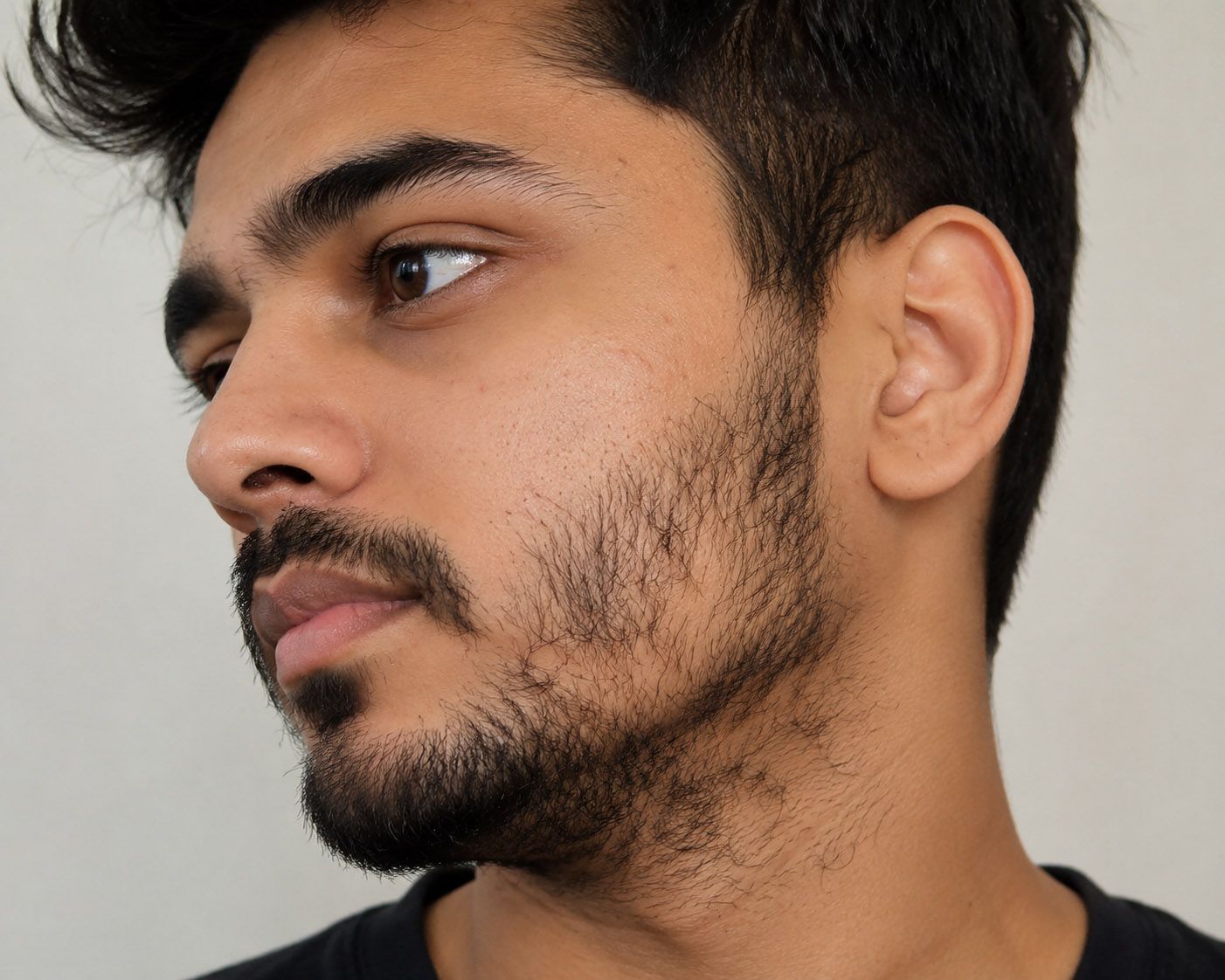
Patchy Beard
This is one of the most common reasons patients seek beard transplantation.
Some men naturally develop irregular beard density, where certain areas appear thin while others grow normally. Patchy growth may affect the cheeks, jawline, moustache, or chin region.
Even when the scalp hair is healthy, facial hair growth patterns can vary significantly due to genetics.
Genetically Sparse Facial Hair
Some individuals simply have very limited facial hair growth despite normal hormonal development. These patients often desire the following:
- Fuller beard density
- Better facial framing
- Improved masculine appearance
- More styling flexibility
A properly planned beard transplant can significantly improve facial balance and definition in such cases.
Beard Scars or Burn Marks
Scars in the beard area, caused by trauma, surgery, burns, or acne, can disrupt natural hair growth and create visible gaps.
Hair transplantation can often help camouflage these areas by implanting follicles strategically into the scar tissue.
However, scar tissue behaves differently from normal skin, so proper planning and realistic expectations are essential.
Desire for Better Facial Definition
A beard can dramatically influence facial aesthetics.
Strategic beard enhancement may improve these things:
- Jawline definition
- Facial symmetry
- Chin prominence
- Overall facial balance
This is why beard design should never follow a standard template. Every face requires individual assessment.
Gender-Affirming Facial Hair Restoration
Beard transplantation may also be considered as part of facial masculinisation and gender-affirming procedures for transgender individuals seeking fuller facial hair development.
In such cases, careful planning is especially important to create beard patterns that appear natural and harmonious with facial structure.
Who is an Ideal Candidate for a Beard Transplant?
Not every patient is automatically suitable for beard transplant surgery. Proper patient selection is one of the most important aspects of achieving successful and natural-looking results.
In my practice, ideal candidates generally include:
- Men with patchy or sparse facial hair
- Patients with adequate donor hair density
- Individuals in good overall health
- Patients with realistic expectations
- Men seeking permanent facial hair restoration
- Patients with beard scars requiring camouflage
The quality of donor hair plays a major role in the final outcome. I carefully evaluate the following features:
- Hair thickness
- Texture
- Density
- Curl pattern
- Donor scalp condition
The goal is to select grafts that blend naturally within the beard region.
I also discuss long-term expectations during consultation. Beard transplantation improves density and shape, but achieving completely unnatural or excessively dense beard styles may not always be advisable or aesthetically suitable.
A natural-looking beard always remains the priority.
How I Perform Beard Transplant Surgery
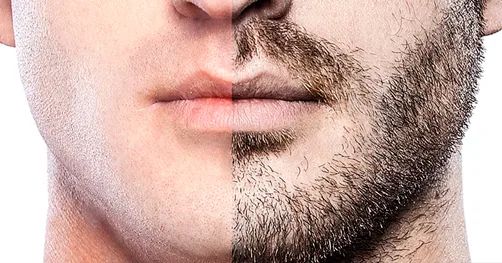
Beard transplantation is a highly detail-oriented procedure. Facial hair restoration requires extremely careful attention to angle, direction, and density because facial hair patterns are much more visible at close range.
Even minor technical errors can create an unnatural appearance.
Consultation and Beard Design
The first and perhaps most important stage is consultation and beard planning.
I evaluate:
- Facial proportions
- Existing beard growth
- Jawline structure
- Facial symmetry
- Skin quality
- Ethnic and age-related beard characteristics
Every patient has a different goal. Some want subtle enhancement, while others desire fuller beard coverage.
I design the beard carefully to ensure:
- Natural transitions
- Appropriate density
- Symmetrical appearance
- Masculine facial balance
An overly sharp or artificial beard outline rarely looks natural in real life. My approach focuses on soft, realistic transitions that age well over time.
Donor Hair Extraction
In most beard transplant procedures, I use the FUE (Follicular Unit Extraction) technique for donor harvesting.
Individual hair follicles are carefully extracted from the donor area, usually at the back of the scalp, using specialised micro-instruments.
The donor area is selected strategically to ensure:
- Graft quality is good
- Minimal visible changes to the donor area
- The donor area is preserved for the long term
Single-hair grafts are especially important in beard transplantation because facial hair naturally grows in softer, irregular patterns rather than dense, grouped clusters. Careful graft selection significantly influences the final natural appearance.
Recipient Site Creation
This is one of the most technically demanding stages of beard transplantation.
Tiny recipient sites are created in the beard region according to the natural direction and angle of facial hair growth.
Unlike head hair, beard hair changes direction frequently across different facial zones:
- Cheeks
- Chin
- Moustache
- Sideburns
Proper angulation is extremely important because incorrectly angled grafts can appear unnatural and difficult to groom.
The depth and spacing of recipient sites must also be controlled carefully to achieve balanced density without compromising blood supply to the skin.
Graft Implantation
Once the recipient sites are prepared, the follicular grafts are implanted individually into the beard area. This stage requires patience, precision, and artistic judgement.
I place grafts strategically to create:
- Natural density gradients
- Softer beard edges
- Realistic irregularity
- Symmetrical facial framing
The objective is not simply to create “more hair,” but to produce a beard that looks naturally developed rather than surgically created.
When properly performed, the transplanted beard integrates seamlessly with existing facial hair.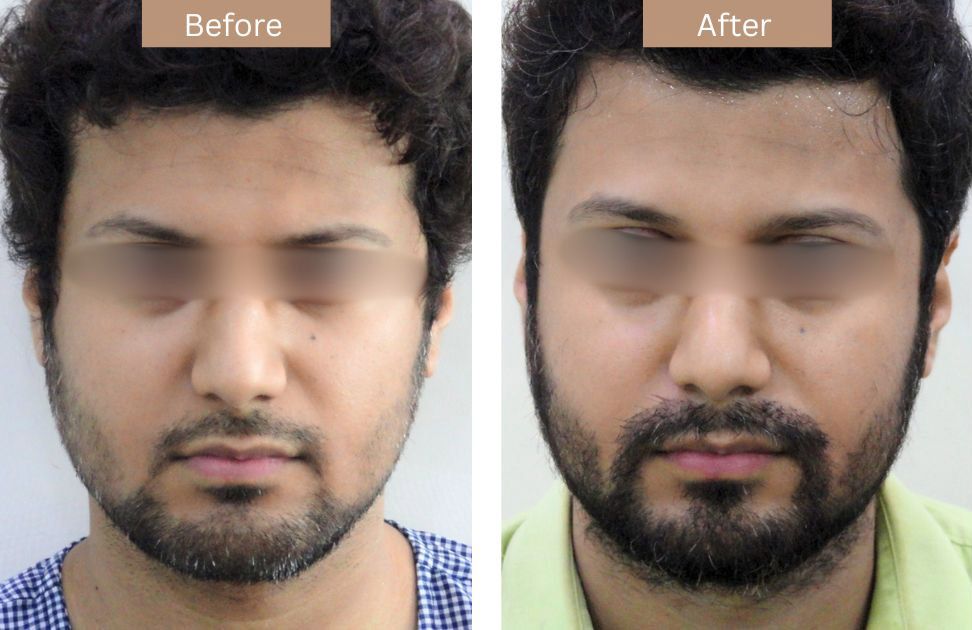
Is Beard Transplant Painful?
One of the most common concerns patients have is whether beard transplant surgery is painful.
The procedure is usually performed under local anaesthesia, so discomfort during surgery is minimal.
Patients may experience these:
- Mild pressure sensations
- Temporary numbness
- Slight soreness after surgery
Most patients tolerate the procedure comfortably without any issues.
After surgery, there may be mild swelling or redness in the treated areas for a few days. The donor area may also feel slightly sensitive temporarily.
Postoperative discomfort is generally manageable with prescribed medications and proper aftercare instructions. Most patients are pleasantly surprised by how comfortable the overall experience is.
Beard Transplant Recovery Timeline
One of the most important aspects of beard transplant surgery is understanding the recovery process. I always explain to patients that beard restoration is gradual, and the final outcome develops over several months.
First Few Days After Surgery
During the initial recovery period, patients may notice:
- Mild redness
- Tiny scabs around implanted grafts
- Slight swelling
- Sensitivity
These effects are usually temporary and improve gradually over the first few days.
I advise patients to:
- Avoid touching or scratching the transplanted area
- Follow gentle cleaning instructions
- Avoid strenuous physical activity initially
- Sleep carefully to avoid friction on the face
Most patients can resume light routine activities relatively quickly.
Shedding Phase
Within a few weeks after surgery, the transplanted hairs usually shed. This phase can sometimes worry patients, but it is completely normal. The roots remain safely implanted beneath the skin, and new permanent hair growth gradually begins afterwards.
Early Hair Growth
Around 3–4 months after surgery, new facial hair starts emerging.
Initially, the hair may appear thin, uneven or lighter in texture. Over time, the transplanted hair gradually matures and blends more naturally with existing facial hair.
Final Beard Results
Most patients notice significant improvement between 6 and 9 months after surgery. The outcome generally develops over approximately 12 months, depending on:
- Individual healing
- Hair growth cycles
- Graft survival
- Skin characteristics
Once fully grown, the transplanted beard hair can be shaved, trimmed and styled normally. This is because the transplanted follicles behave like natural facial hair.
What Makes a Beard Transplant Look Natural?
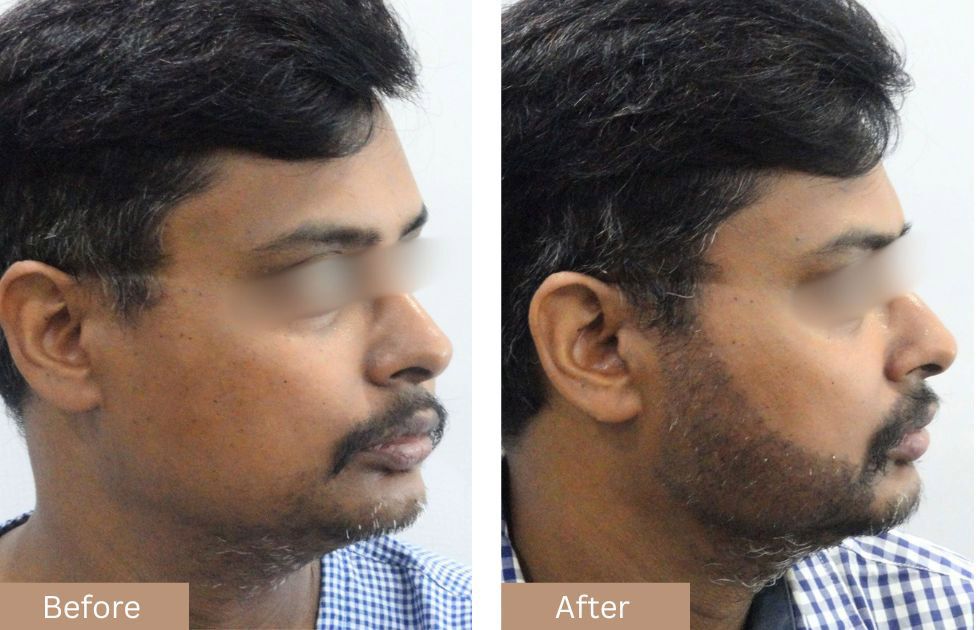
One of the most important aspects of beard transplantation is the natural look. A beard transplant should never appear artificial, excessively sharp, or visibly “plugged.” Unfortunately, poorly performed procedures can create unnatural patterns that are difficult to correct later.
Several factors determine whether the final result looks natural. Read about them here.
Correct Hair Direction
Facial hair grows at very specific angles.
The direction changes continuously across:
- Cheeks
- Chin
- Jawline
- Moustache region
- Sideburns
If grafts are implanted at incorrect angles, the beard may look unnatural or become difficult to groom properly. This is why recipient site creation requires precision and experience.
Proper Density Distribution
Natural beards are not uniformly dense throughout the face. Certain areas naturally appear softer, denser and more irregular. In my approach, I avoid creating unnaturally straight or heavily packed beard patterns. Instead, I focus on recreating realistic facial hair transitions.
Avoiding Artificial Beard Lines
Overly sharp beard borders may initially appear attractive in edited social media photographs, but they often look unnatural in everyday life.
A natural beard should have subtle irregularity and softer blending along the edges. This is one of the reasons why artistic judgement plays such an important role in beard transplantation.
Surgeon Experience and Aesthetic Understanding
Beard transplantation is not simply a technical procedure. The surgeon must understand:
- Facial anatomy
- Masculine facial aesthetics
- Hair growth behaviour
- Symmetry and balance
- Long-term appearance
Even when sufficient grafts are available, improper planning can create results that appear artificial or disproportionate. My objective is always to create beard restoration results that enhance the patient’s appearance naturally without drawing attention to the surgery itself.
Risks and Safety Considerations
Beard transplant surgery is generally safe when performed under proper surgical protocols. However, like any medical procedure, certain risks and temporary side effects may occur.
Fortunately, serious complications are uncommon.
Infection
Minor infections are rare but possible after any hair transplant procedure. Proper hygiene, sterile techniques, and postoperative care help minimise this risk significantly.
Temporary Redness or Swelling
Mild redness and swelling in the beard area are common during the early recovery phase. These effects usually improve gradually within days to weeks.
Folliculitis
Occasionally, some patients may develop small pimple-like bumps as transplanted hairs begin growing. This condition, known as folliculitis, is usually temporary and manageable.
Shock Loss
Temporary shedding of surrounding existing facial hair may occur in some patients. In most cases, this improves naturally over time.
Uneven Growth During Early Stages
Hair growth after transplantation is gradual and not perfectly synchronised. Some grafts may grow earlier than others initially, but overall density generally improves progressively over several months.
Beard Transplant Cost in Kolkata
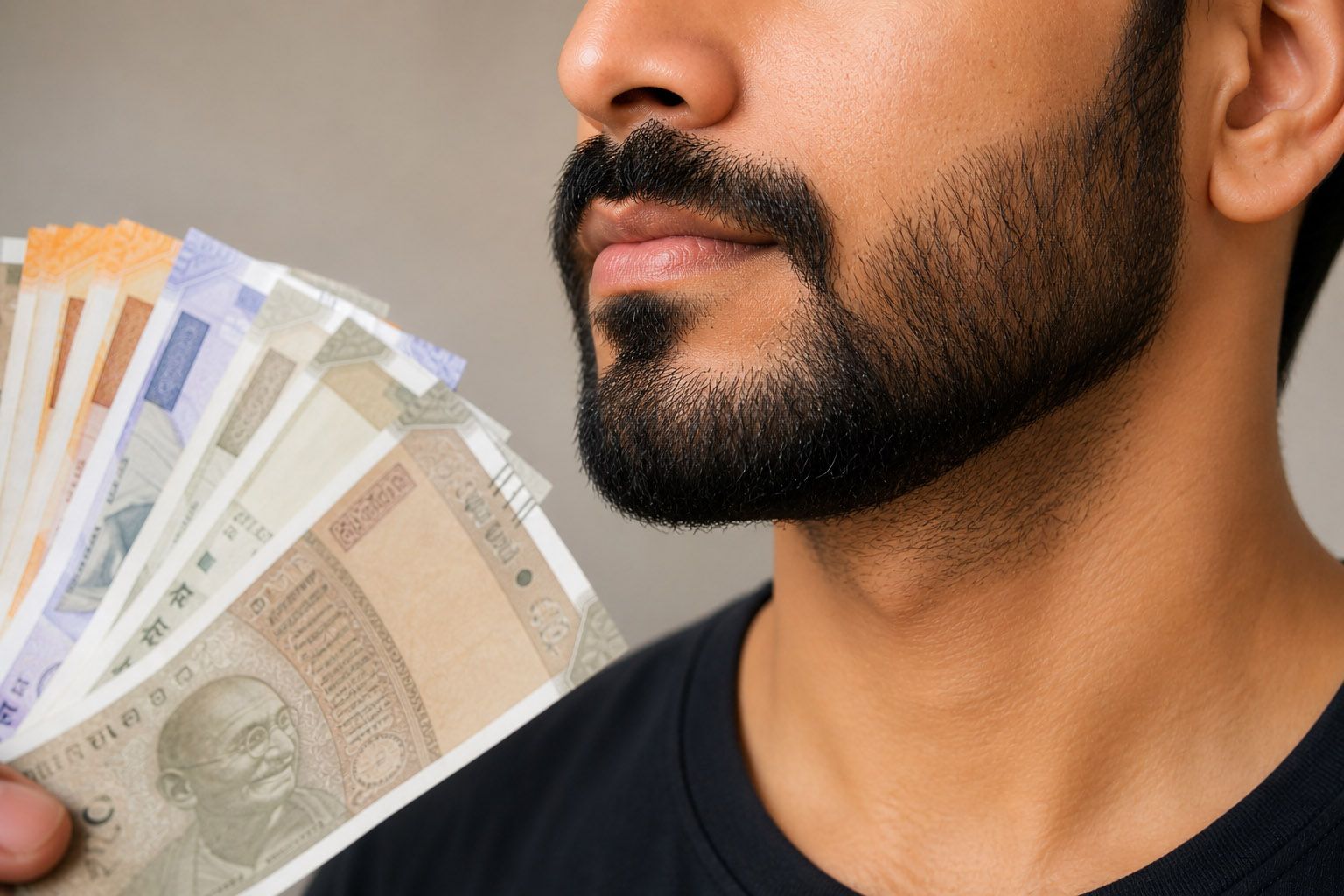
The cost of beard transplant surgery depends on multiple factors and varies from patient to patient.
Some of the major factors influencing the cost are:
- Number of grafts required
- Extent of beard restoration
- Density goals
- Scar correction requirements
- Complexity of beard design
- Previous procedures (if any)
Patients with small patchy areas may require relatively fewer grafts, while full beard reconstruction naturally requires more extensive planning and transplantation.
I always advise patients not to choose a procedure solely based on low cost. Beard transplantation is a highly detail-sensitive surgery, and poor planning can lead to unnatural results that may later require correction.
The quality of graft placement, facial design, and surgical precision plays a major role in the final outcome.
Why Choose Dr Manoj Khanna for Beard Transplant in Kolkata?
Facial hair restoration requires far more than simply transplanting hair follicles.
As a board-certified plastic surgeon with more than 30 years of surgical experience, I approach beard transplantation with a strong focus on:
- Facial aesthetics
- Natural beard design
- Symmetry and balance
- Precision graft placement
- Long-term appearance
Every patient has unique facial proportions and beard growth characteristics. Therefore, every beard transplant plan must be personalised.
In my practice, I focus on:
- Detailed consultation and assessment
- Natural-looking density patterns
- Aesthetic beard framing
- Careful graft handling
The goal is always to create facial hair that complements the patient naturally rather than appearing surgically made.
Conclusion
Beard transplant surgery has become an increasingly popular solution for men seeking fuller, denser, and more balanced facial hair.
Whether the concern is patchy growth, beard scars, sparse density, or facial definition, modern beard transplantation can provide natural and permanent improvement when performed properly.
The success of the procedure depends not only on graft survival, but also on these:
- Proper beard design
- Correct hair angulation
- Natural density planning
- Surgical expertise
- Artistic judgement
A well-planned beard transplant should enhance facial aesthetics subtly and naturally without appearing artificial. If you are considering beard transplant surgery, a detailed consultation and facial assessment can help determine the most suitable approach for your goals and facial structure.
Schedule Your Beard Transplant Consultation
If you are considering beard transplant surgery in Kolkata, I invite you to consult with me at Enhance Clinics for a detailed facial hair assessment and personalised treatment plan.
Contact Details
Book Consultation: +91 98300 85506
Clinic Address: Enhance Aesthetic and Cosmetic Studio, 12, Loudon Street, Flat 5A, Kolkata, West Bengal 700017, Opposite Bellevue Clinic
Website: www.plasticsurgery-india.com
FAQs About Beard Transplant Surgery
- What is a beard transplant?
A beard transplant is a facial hair restoration procedure in which healthy hair follicles are transplanted into areas with sparse or absent beard growth.
- Is a beard transplant permanent?
Yes, transplanted hair follicles are generally permanent because they are taken from genetically stable donor areas.
- Which hair is used for beard transplant surgery?
In most cases, donor hair is taken from the back of the scalp because it provides strong and reliable follicular growth.
- Does a beard transplant look natural?
When performed correctly with proper angulation and density planning, beard transplant results can appear highly natural.
- Is a beard transplant painful?
The procedure is performed under local anaesthesia, so discomfort during surgery is minimal. Mild soreness or swelling may occur temporarily afterwards.
- How many grafts are needed for a beard transplant?
The number of grafts depends on the extent of beard restoration required. Small patch corrections need fewer grafts, while full beard reconstruction requires more extensive transplantation.
- How long does beard transplant recovery take?
Most patients recover comfortably within a few days, although full hair growth develops gradually over several months.
- When can I shave after a beard transplant?
Patients are usually advised to wait several weeks before shaving the transplanted area. Specific timelines vary depending on healing progress.
- Are beard transplant scars visible?
FUE donor extraction usually leaves tiny dot scars that are generally minimally visible when healed properly.
- What is the cost of a beard transplant in Kolkata?
The cost depends on graft numbers, beard design complexity, density goals, and individual treatment requirements.
- Can a beard transplant cover scars?
Yes, beard transplantation can often help camouflage scars within the facial hair region, although results depend on scar characteristics and blood supply.
- Who is a good candidate for beard transplant surgery?
Men with patchy beard growth, sparse facial hair, beard scars, or those seeking fuller facial hair density may be suitable candidates if they have adequate donor hair.
Enhance Aesthetic & Cosmetic Studio
12, Loudon Street Kolkata - 700 017, India
Monday to Saturday at - 10am to 7pm (By appointment)
+91-33-22829126 / 22828500
+91 98300 85506
drmkhanna@gmail.com
Celebrities with Dr Manoj Khanna
• Arun Lal, Cricket Player
• Dilip Vengsarkar, Cricket Player
• Brijesh Patel, Cricket Player
• Roger Binny, Cricket Player
• Govinda, Actor
• Mimoh Chakrabarty, Actor
• Arjun Chakrabarty, Actor
• Nikhil Chopra, Cricket Player
• Charu Sharma, Cricket Player
• Rituparna Sengupta, Actor
• Lalchand Rajput, Cricket Player
• Brijesh Patel, Cricket Player