
Introduction
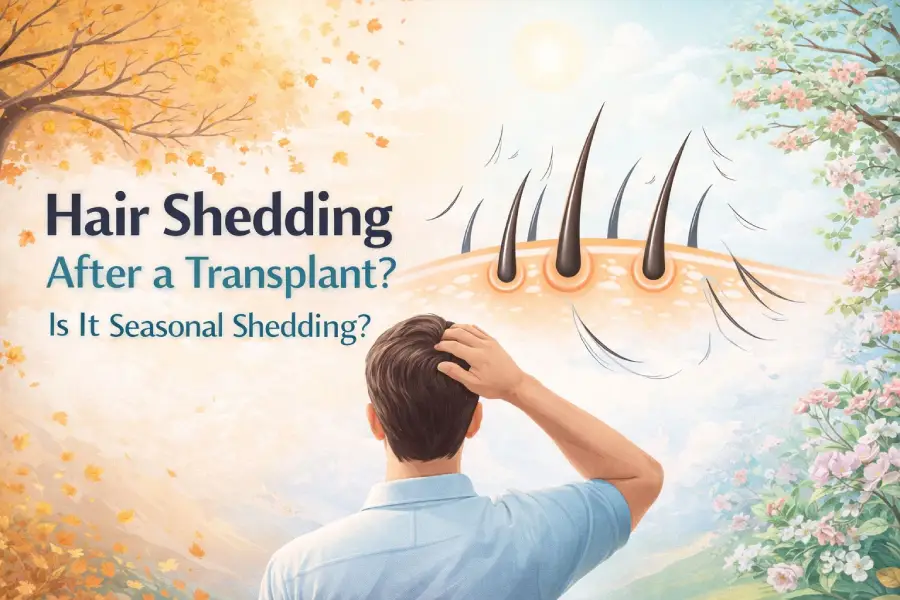
One of the most common concerns after a hair transplant is noticing hair fall during recovery. Many patients worry that something has gone wrong. But in most cases, this is a normal part of the process.
In addition to expected post-transplant shedding, some individuals might even experience seasonal hair shedding. This can make the situation seem more alarming than it actually is.
Understanding the difference can help you keep calm.
What Is Normal Hair Fall After a Hair Transplant?
After a hair transplant procedure, it is completely normal for the transplanted hairs to shed within the first few weeks. This is known as shock loss.
- Typically occurs within 2–6 weeks after the procedure
- The hair shafts fall out, but the follicles remain intact
- New hair growth usually begins within 3–4 months
This phase is temporary and is actually a sign that the hair cycle is resetting.
What Is Seasonal Shedding?
Seasonal shedding refers to a temporary increase in hair fall during certain times of the year—most commonly Autumn and Spring.
Although the exact cause is not fully understood, experts believe it is linked to the following:
- Changes in daylight exposure
- Fluctuations in temperature
- Natural shifts in hormonal cycles
This type of shedding can affect both transplanted and non-transplanted hair.
Why Seasonal Shedding Feels Worse After a Transplant
After a hair transplant, patients tend to observe their hair more closely. So when seasonal shedding overlaps with the recovery phase, it can feel like excessive or abnormal hair loss. This overlap can create unnecessary concern if not properly understood.
How to Tell If It’s Normal or a Problem
Likely Normal If:
- Hair fall occurs within the expected timeline after transplant
- No signs of infection, redness, or pain
- Hair growth begins gradually after a few months
Consult Your Surgeon If:
- Hair loss continues beyond the expected recovery period
- There are visible gaps or uneven patches
- No regrowth is seen after 4 to 6 months
A professional evaluation can provide clarity.
How Long Does Seasonal Shedding Last?
Seasonal shedding is usually temporary and may last 4 to 8 weeks in most cases. Hair returns to its normal growth cycle afterwards without affecting long-term results.
Tips to Manage Hair Fall After a Transplant
- Carefully follow your surgeon’s post-operative instructions.
- Maintain a balanced diet rich in protein and nutrients.
- Be patient. Remember that hair growth takes time.
- Avoid self-diagnosing or trying unverified treatments without medical advice.
Conclusion
Hair fall after a hair transplant is not always a cause for concern. In many cases, it is either a natural part of the healing process or due to seasonal shedding.
Understanding these patterns can help you stay calm and focused on your long-term results.
If you’re unsure whether your hair fall is normal, a professional evaluation with Dr Manoj Khanna can help you understand what’s happening and guide you appropriately.
Contact Details
Book Consultation: +91 98300 85506
Clinic Address: Suite 5A, Minto Park, Maruti Building, 12, Sir UN Brahmachari Sarani, opposite Bellevue Clinic, Kolkata, West Bengal 700017
Website: www.plasticsurgery-india.com
FAQs
1. Is hair fall after a hair transplant normal?
Yes, temporary shedding is a normal part of the process.
2. Can seasonal shedding affect transplanted hair?
Yes, transplanted hair can also follow natural seasonal cycles.
3. When should I worry about hair loss after a transplant?
If there is no regrowth after 4 to 6 months or if symptoms seem unusual, consult your surgeon.
4. Will seasonal shedding affect my final results?
No, seasonal shedding is temporary and does not impact long-term transplant outcomes.