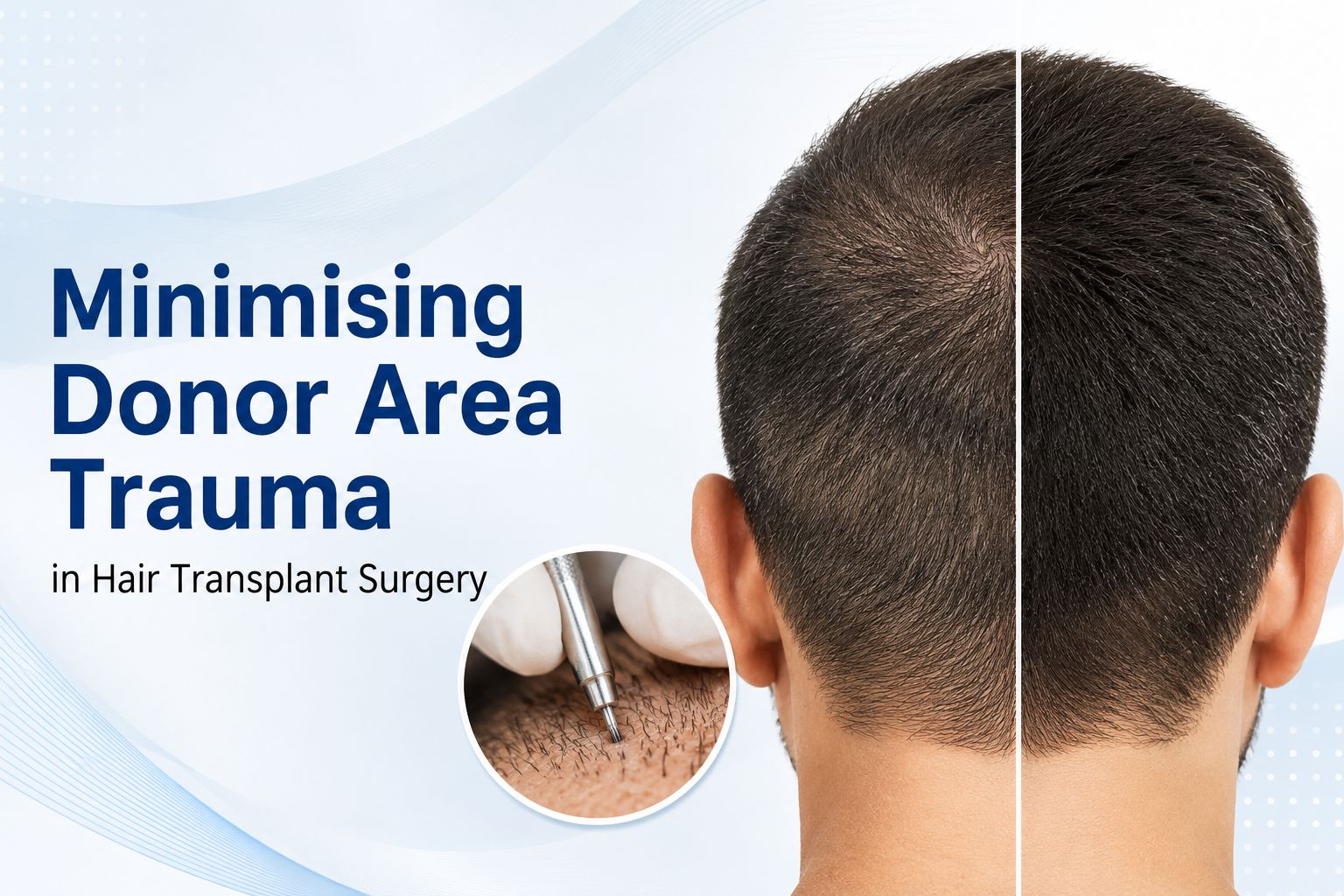
Minimising Donor Area Trauma in Hair Transplant Surgery
By Dr Manoj Khanna
Board-Certified Plastic Surgeon | 30+ Years of Experience
Hair transplant surgery has evolved tremendously over the years. Modern techniques allow us to create natural-looking results with minimal downtime and excellent graft survival. However, while most patients focus primarily on the implanted area, I always emphasise that the donor area is equally important. In fact, the long-term success of a hair transplant depends greatly on how carefully the donor region is handled during surgery.
One of the most important goals in my practice is minimising donor area trauma. A healthy donor area not only heals faster but also preserves the possibility of future procedures if required. Excessive trauma, poor planning, or aggressive extraction can permanently compromise the donor zone and negatively affect the final aesthetic outcome.
In this article, I will explain what donor area trauma means, what causes it, and the techniques I use to minimise it while performing hair transplant surgery.
Understanding the Donor Area
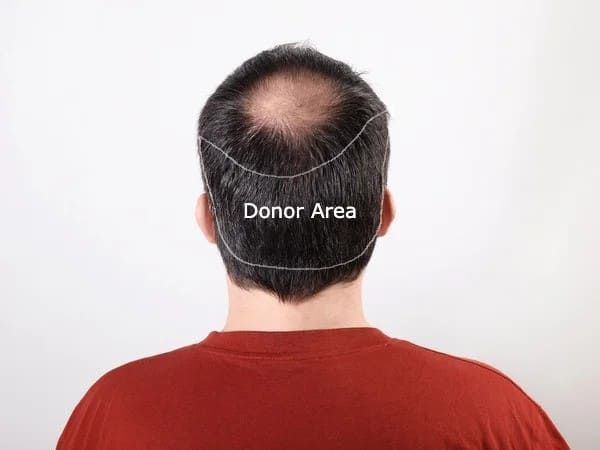
The donor area refers to the region of the scalp from which hair follicles are extracted for transplantation. In most patients, this area is located at the back and sides of the scalp because these follicles are genetically resistant to hair loss caused by androgenetic alopecia.
These donor hairs are precious because they are limited in number. Unlike the recipient area, where we aim to restore density, the donor area must be preserved carefully to maintain a balanced and natural appearance. Once donor follicles are removed, they do not regenerate in the same location. This is why responsible donor management is one of the most important aspects of successful hair restoration surgery.
Many patients assume that modern FUE hair transplant techniques leave “no scars” or “no damage.” While FUE significantly reduces visible scarring compared to older methods, trauma can still occur if the procedure is not performed properly. Overharvesting, poor extraction angles, repeated punching, and excessive graft removal can all create long-term donor problems.
Why Donor Area Health Matters
In my experience, patients often focus entirely on achieving maximum density in the frontal scalp or crown. However, creating density should never come at the cost of damaging the donor region.
A poorly managed donor area can lead to:
- Visible thinning at the back of the scalp
- Uneven patchy appearance
- White dot scarring
- Shock loss
- Delayed healing
- Difficulty performing future hair transplant sessions
I always remind my patients that hair transplantation is not simply about moving grafts from one area to another. It is about maintaining harmony between the donor and recipient regions. A natural result depends on both areas looking healthy and proportionate.
Preserving donor reserves also becomes extremely important in younger patients who may continue to lose native hair over time. Careful donor management allows us to plan intelligently for future hair restoration needs.
What Causes Donor Area Trauma During a Hair Transplant?
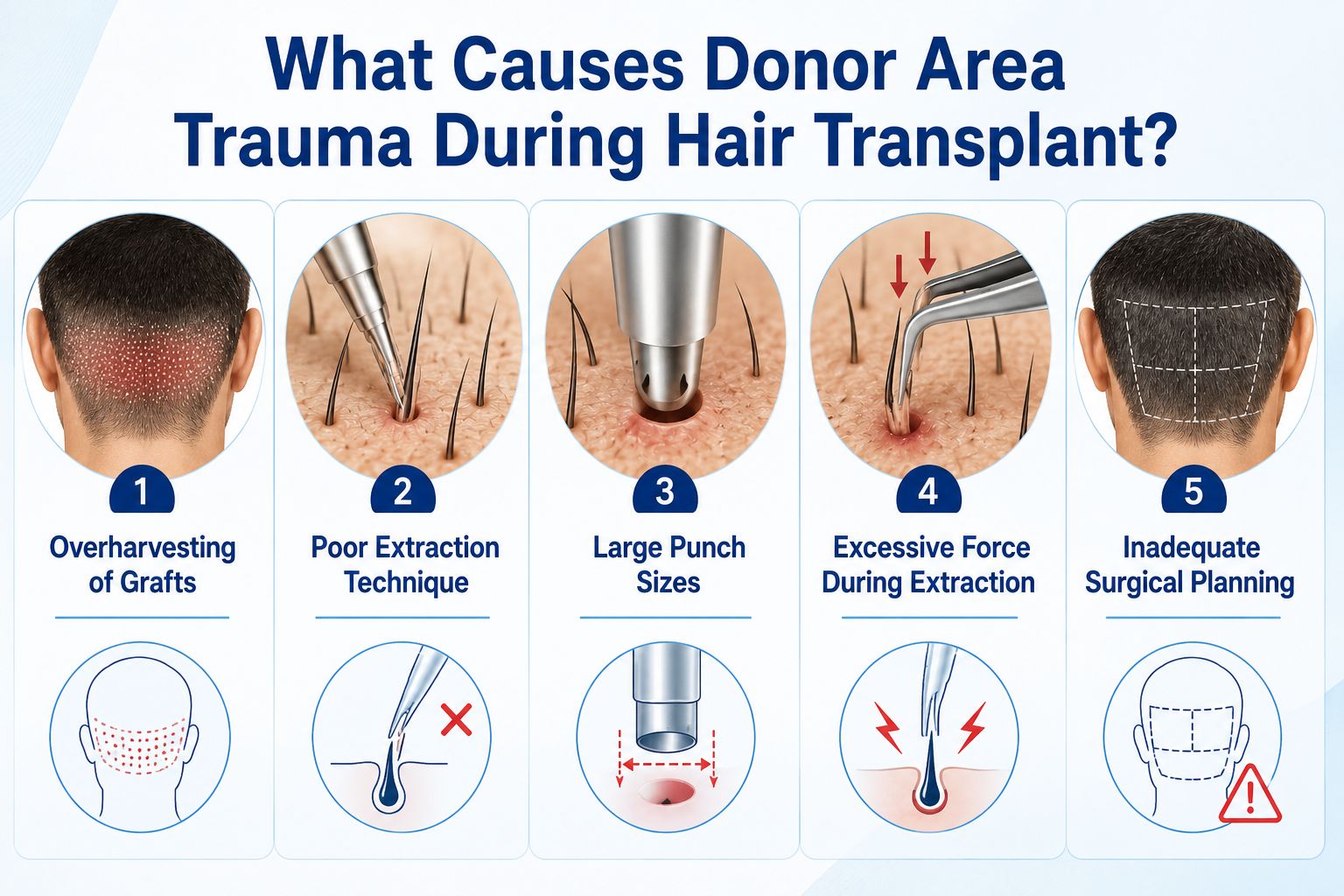
Overharvesting of Grafts
One of the most common causes of donor area trauma is overharvesting. This occurs when too many grafts are extracted from a limited area of the scalp.
In some clinics, the focus is placed entirely on extracting the maximum possible number of grafts in a single session. While this may initially create the impression of higher density in the recipient area, it can leave the donor area visibly depleted.
I strongly believe that aggressive extraction is not in the patient’s long-term interest. Every scalp has a safe extraction limit depending on donor density, hair calibre, scalp laxity, and future hair loss potential. Respecting these limits is essential.
Poor Extraction Technique
Hair follicles lie beneath the skin at different angles and depths. During FUE extraction, the punch must follow the natural direction of the follicle carefully.
Improper punch angulation can transect follicles and damage surrounding tissue. Repeated attempts to extract the same graft increase trauma, inflammation, and scarring.
Experience plays a major role here. Hair transplantation is not merely a mechanical procedure. It requires precision, patience, and an understanding of hair anatomy.
Large Punch Sizes
The size of the punch used during FUE directly influences donor healing and scarring.
Larger punches may increase tissue injury and create more visible scars. In my practice, I prefer using smaller precision punches whenever appropriate because they help minimise tissue disruption while maintaining good graft quality.
Smaller punches allow faster healing and better cosmetic outcomes in most patients.
Excessive Force During Extraction
Forceful extraction can crush follicles and injure surrounding skin structures. Gentle handling is extremely important throughout the procedure.
Trauma caused by rough extraction can result in prolonged redness, swelling, and discomfort after surgery. It may also affect graft survival.
I always prioritise atraumatic handling techniques to protect both the grafts and the donor scalp.
Inadequate Surgical Planning
Proper donor management begins before the first graft is extracted.
A surgeon must assess:
- Donor density
- Hair shaft thickness
- Scalp flexibility
- Existing miniaturisation
- Future hair loss pattern
- Hair characteristics and texture
Without detailed planning, graft extraction can become uneven and excessive in certain areas. This creates a moth-eaten appearance that may become visible when the hair is cut short.
My Approach to Minimising Donor Area Trauma
Careful Donor Area Assessment
Before recommending surgery, I perform a detailed donor evaluation for every patient. This helps me determine the safe number of grafts that can be harvested without compromising donor appearance.
Not every patient is suitable for very large sessions. In some individuals, conservative graft extraction produces safer and more natural long-term results.
I also discuss future hair loss progression with patients because donor preservation is essential for maintaining options later in life.
Strategic Donor Planning
One of the key principles I follow is uniform extraction distribution.
Instead of concentrating graft removal in one region, I spread extractions evenly across the safe donor zone. This helps maintain visual density and reduces the risk of patchiness.
Careful spacing between extraction sites is equally important. Removing grafts too close together can damage surrounding follicles and create unnecessary trauma.
Use of Smaller Precision Punches
Modern FUE technology has significantly improved donor area healing. Smaller punches allow more precise extraction with reduced scarring and tissue injury.
However, punch selection must always be customised according to the patient’s hair characteristics. Extremely small punches used incorrectly may increase graft transection. Therefore, experience and proper technique remain critical.
Gentle Extraction Techniques
I believe that atraumatic extraction is one of the defining features of high-quality hair transplant surgery.
Every graft must be removed carefully while preserving the surrounding tissue. Excessive speed should never compromise donor safety.
By using meticulous extraction methods, we can reduce inflammation, minimise discomfort, and promote faster healing.
Limiting Extraction Numbers When Necessary
Many patients ask whether larger sessions are always better. The answer is no.
While mega sessions can be appropriate in selected cases, attempting to extract excessive grafts in a single sitting may increase donor trauma substantially.
In some patients, dividing treatment into staged sessions is safer and more beneficial in the long term.
The ultimate goal is not simply to maximise graft numbers, but to achieve natural, sustainable, and aesthetically balanced results while preserving donor integrity.
FUE vs FUT — Which Causes Less Donor Trauma?
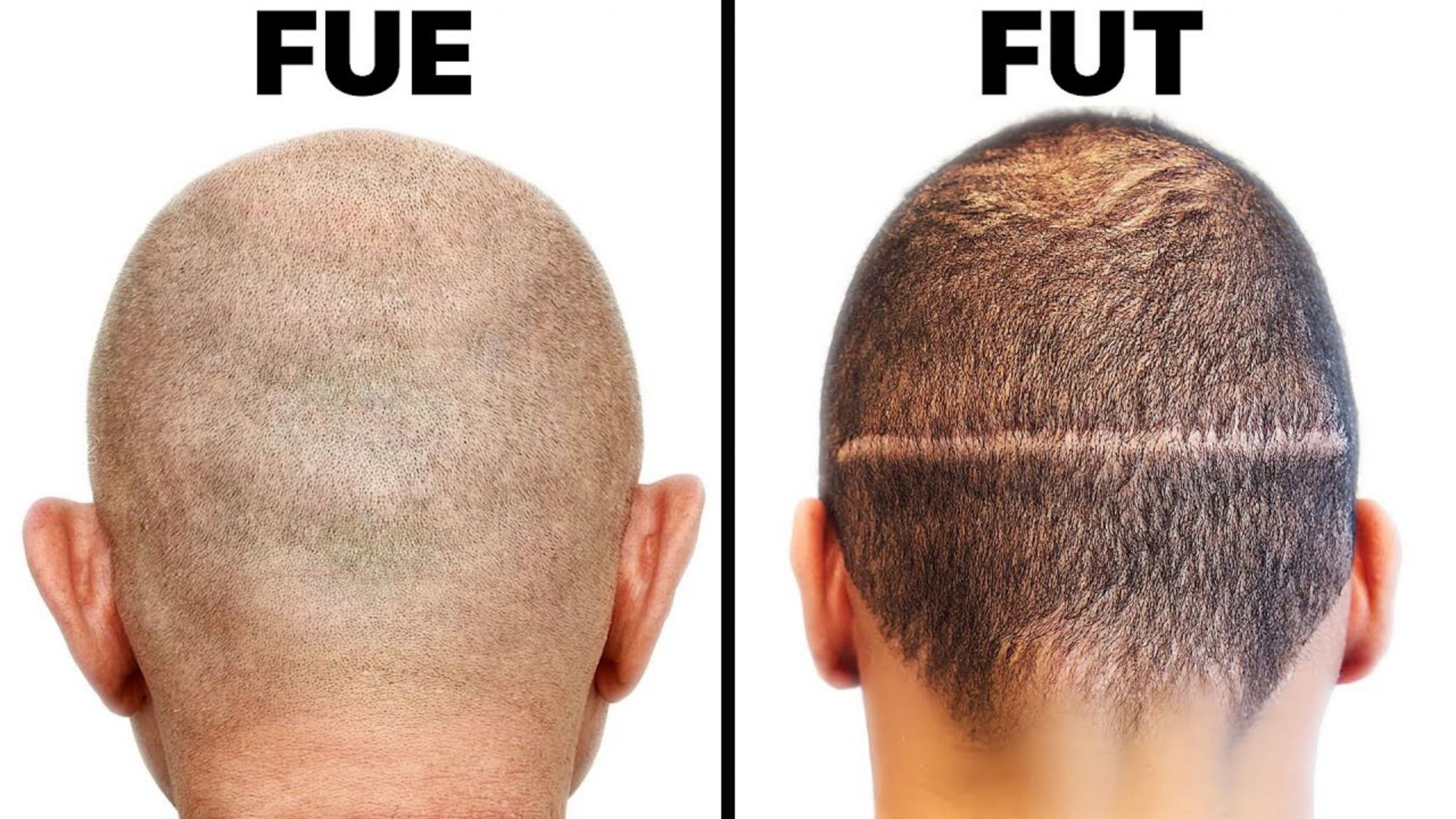
Patients frequently ask me whether FUE or FUT is safer for the donor area. The truth is that both techniques can produce excellent results when performed correctly. The key difference lies in how the grafts are harvested.
Donor Impact in FUE
In Follicular Unit Extraction (FUE), individual grafts are removed using small punches. This avoids a linear scar and usually allows patients to wear shorter hairstyles comfortably.
However, FUE is highly technique-sensitive. If grafts are extracted too densely or from unsafe zones, the donor area can develop visible thinning. This is why proper planning and controlled extraction are critical.
When performed carefully, FUE offers minimal scarring, faster recovery, and excellent cosmetic outcomes.
Donor Impact in FUT
In Follicular Unit Transplantation (FUT), a strip of scalp is removed from the donor area, and the follicles are dissected under magnification.
FUT leaves a linear scar, but it can sometimes preserve donor density more effectively because follicles are harvested from a concentrated strip rather than spread diffusely across the scalp.
In selected patients with good scalp laxity and higher graft requirements, FUT may still be a suitable option. The choice between FUE and FUT should always be individualised rather than trend-driven.
Technologies That Help Reduce Donor Area Damage
Modern hair transplant technology has significantly improved donor preservation and healing.
High-Magnification Extraction
Magnification allows better visualisation of follicle direction and angulation during extraction. This improves accuracy and reduces unnecessary tissue trauma.
Advanced Motorised Systems
Modern motorised extraction devices can improve consistency and efficiency when used properly. However, the technology itself is not enough. The surgeon’s experience and judgement remain the most important factors.
Precision Instrumentation
Refined surgical instruments help reduce tissue injury during graft harvesting. Smaller, sharper, and well-designed tools contribute to cleaner extraction sites and faster healing.
Proper Graft Handling
Minimising donor trauma does not stop after extraction. Grafts must be handled gently and stored appropriately to maintain viability and reduce unnecessary damage.
Every stage of the procedure matters.
Signs of Excessive Donor Area Trauma
Patients should understand the difference between normal healing and excessive trauma after hair transplant surgery.
Some temporary redness, mild swelling, and soreness are expected in the first few days. However, certain signs may indicate overharvesting or tissue injury.
These include:
- Persistent redness lasting several weeks
- Visible patchiness in the donor region
- Excessive pain or inflammation
- Delayed healing
- Infection
- White dot scarring
- Donor shock loss
Shock loss refers to the temporary shedding of existing hairs due to surgical stress. In most cases, this improves over time, although severe trauma may occasionally cause a permanent reduction in density.
This is why choosing an experienced and ethical surgeon is extremely important.
Recovery and Donor Area Care After Hair Transplant
Good post-operative care also plays a significant role in minimising donor complications.
Immediate Post-Procedure Care
After surgery, I provide detailed instructions regarding cleaning, sleeping position, medications, and activity restrictions.
Patients should avoid rubbing or scratching the donor area during the early healing phase.
Washing Instructions
Gentle washing usually begins within a few days after surgery. Harsh pressure or aggressive rubbing should be avoided.
Using recommended shampoos and following proper hygiene helps reduce infection risk and supports healthy healing.
Avoiding Excessive Physical Activity
Heavy exercise, gym workouts, and strenuous activity should be avoided for a short period after surgery because excessive sweating and friction may irritate the donor area.
Nutrition and Hydration
Good nutrition supports wound healing. Adequate protein intake, hydration, and proper sleep all contribute to faster recovery.
Smoking should also be avoided because it can negatively affect blood circulation and healing.
Healing Timeline
Most patients notice significant improvement in donor healing within 7–14 days. Tiny extraction marks usually become less visible over time.
The final donor appearance continues to improve over several months.
Can Donor Area Damage Be Repaired?
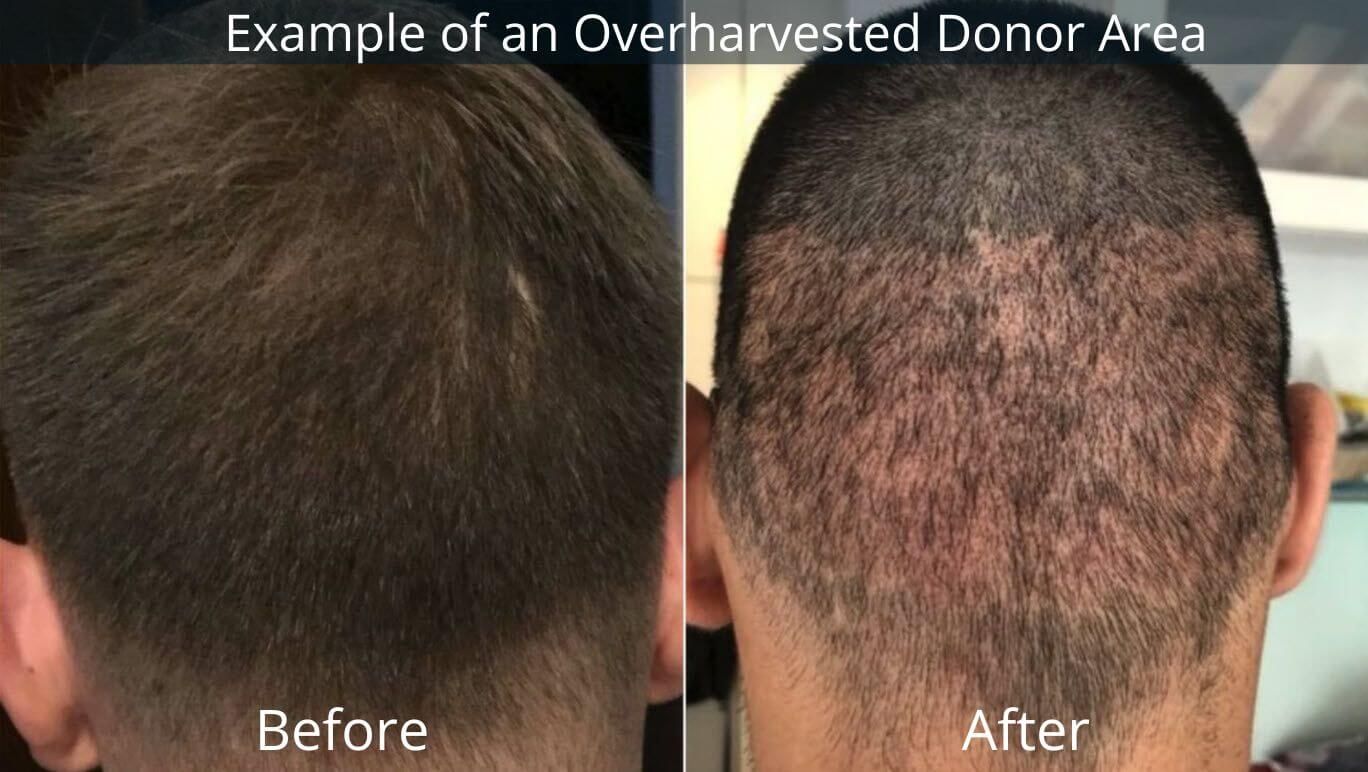
Unfortunately, severe overharvesting can be challenging to reverse completely. However, several corrective options may improve appearance.
Corrective Hair Transplant Procedures
In selected cases, redistribution of grafts may help improve donor density and camouflage patchy areas.
Scalp Micropigmentation
Scalp micropigmentation (SMP) can reduce the visibility of thinning and scarring by creating the illusion of density.
Beard or Body Hair Transplant
Additional donor sources, such as beard or body hair, may sometimes be used in corrective procedures for carefully selected patients.
Scar Revision
Patients with visible FUT scars may benefit from scar revision techniques or scar camouflage procedures.
The best strategy, however, is always prevention rather than correction.
Long-Term Donor Area Preservation
Hair loss is progressive in many individuals. This is why long-term planning is extremely important before performing surgery.
I strongly believe in conservative and ethical graft usage. Extracting every possible graft during the first procedure may compromise future treatment options.
A successful hair transplant should still look natural many years later. This requires thoughtful planning, realistic expectations, and responsible donor management.
Why Patients Choose Dr Manoj Khanna for Hair Transplant Surgery
Over the years, I have focused on combining surgical precision with artistic planning to create natural and sustainable hair restoration results.
My approach prioritises:
- Careful donor preservation
- Natural hairline design
- Safe extraction techniques
- Individualised treatment planning
- Long-term aesthetic balance
- Ethical graft management
Every patient’s hair loss pattern, donor characteristics, and future needs are unique. Therefore, I believe every treatment plan should also be personalised.
Conclusion
Minimising donor area trauma is one of the most important principles of successful hair transplant surgery. While restoring hair density in the recipient area is important, preserving the donor region is equally essential for achieving natural and long-lasting results.
Modern techniques and advanced instrumentation have made hair transplantation safer than ever before, but the surgeon’s skill, judgement, and ethics remain the most critical factors.
A well-managed donor area heals faster, looks natural, and preserves future treatment possibilities. My goal is always to achieve balanced, aesthetically pleasing results while protecting the long-term health of the donor scalp.
Schedule Your Hair Transplant Consultation
If you are considering a hair transplant and are concerned about donor area safety, I invite you to consult with me at Enhance Clinics for a detailed scalp evaluation and a personalised hair restoration plan focused on natural results and long-term donor preservation.
Contact Details
Book Consultation: +91 98300 85506
Clinic Address: Enhance Aesthetic and Cosmetic Studio, 12, Loudon Street, Flat 5A, Kolkata, West Bengal 700017, Opposite Bellevue Clinic
Website: www.plasticsurgery-india.com
FAQs
- Does hair grow back in the donor area after FUE?
No. The extracted follicles do not regrow in the same location. However, when grafts are removed strategically, the remaining hair usually provides adequate coverage.
- Can the donor area look thin after a hair transplant?
Yes, excessive extraction or poor planning can create visible thinning. Proper donor management helps avoid this problem.
- Is donor area scarring permanent?
Tiny scars from FUE are permanent but usually very difficult to notice when the procedure is performed correctly.
- How long does the donor area take to heal?
Most patients experience significant healing within 1–2 weeks, although complete maturation continues over several months.
- What is donor shock loss?
Donor shock loss refers to the temporary shedding of existing hairs after surgery due to surgical stress or inflammation.
- Can overharvested donor areas be repaired?
Partial improvement may be possible using corrective hair transplantation, scalp micropigmentation, or camouflage techniques.
- Which technique is better for donor preservation — FUE or FUT?
Both can produce excellent results when performed correctly. The ideal technique depends on the patient’s scalp characteristics and goals.
- How many grafts can safely be extracted?
The safe number varies from patient to patient depending on donor density, hair calibre, scalp flexibility, and future hair loss progression.
- Can I keep short hair after FUE?
In most cases, yes. FUE usually leaves tiny dot scars that are less visible even with shorter hairstyles.
- How can I protect my donor area after surgery?
Following post-operative instructions carefully, avoiding trauma, maintaining scalp hygiene, and choosing an experienced surgeon are essential for donor protection.
Enhance Aesthetic & Cosmetic Studio
12, Loudon Street Kolkata - 700 017, India
Monday to Saturday at - 10am to 7pm (By appointment)
+91-33-22829126 / 22828500
+91 98300 85506
drmkhanna@gmail.com
Celebrities with Dr Manoj Khanna
• Arun Lal, Cricket Player
• Dilip Vengsarkar, Cricket Player
• Brijesh Patel, Cricket Player
• Roger Binny, Cricket Player
• Govinda, Actor
• Mimoh Chakrabarty, Actor
• Arjun Chakrabarty, Actor
• Nikhil Chopra, Cricket Player
• Charu Sharma, Cricket Player
• Rituparna Sengupta, Actor
• Lalchand Rajput, Cricket Player
• Brijesh Patel, Cricket Player